

 Suche
Suche
 Mein Konto
DPF training at Stahlgruber
A training course on the topic of “diesel particulate filters – professional diagnosis and safe repair” took place in the new Stahlgruber SALES STORE IN KREMS. A good 30 Stahlgruber customers took part.

DPF training at Stahlgruber
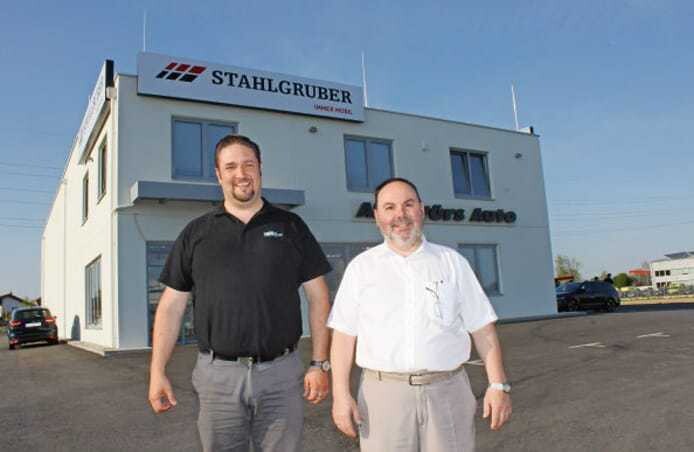
At Stahlgruber Austria, ongoing training for customers is particularly important. In an industry that is fundamentally changing at ever shorter intervals, it is essential to always be up to date and aware of the technical status quo. The automotive industry was present at the latest training in the new Stahlgruber sales store in Krems. Sales store manager Markus Wokaun-Siller was able to welcome around 30 Stahlgruber customers to the new sales store. A lecture depends on the presentation talent of the speaker. This much can be revealed straight away: Thomas Landgraf, area manager at Ernst (Innovative Exhaust Technology), gave an understandable and clear presentation and answered the training participants' questions competently and comprehensibly. The topic: “Diesel particulate filters – professional diagnosis, safe repairs and satisfied customers”. One thing first: Due to legal regulations, modern diesel vehicles have complex technology to prevent pollutant emissions. Diesel particle filters, SCR catalytic converters and exhaust gas recirculation systems are installed in the vehicles. Training manager Thomas Landgraf explained how the system components work in the different operating states and what values sensors and actuators deliver to the control devices. Landgraf also explained the exact component testing using different measuring and testing techniques. For structured troubleshooting, Ernst works with checklists on the vehicle. As part of the training, the training participants also learned about the various diesel injection systems and emissions standards.
OPTIMIZATION THROUGH STRUCTURING
“Errors in the regeneration of the diesel particle filter and in the diesel electronics quickly become a particular challenge in everyday workshop life,” says Landgraf, outlining the problem. In the current training, participants learn how to specifically check the various components and optimize the repair process with structured troubleshooting. “With this knowledge, the workshops secure an important repair segment and present themselves as competent contacts,” says Landgraf.
DIESEL PARTICLE FILTER FOR REPLACEMENT
There are currently 2.7 million diesel vehicles in Austria. Around 50 percent of all new registrations in 2017 were diesel vehicles. Due to EU legislation, almost all diesel vehicles have had a factory-installed diesel particulate filter since 2006/2007. After around 80,000 to 160,000 km, they lose their function and must be replaced. The Ernst company has been offering the first replacement filters since 2014 and has been gradually expanding the delivery program since then.
Training manager Thomas Landgraf explicitly warns against installing parts that do not comply with the ECE standard. ECE (Economic Commission for Europe) regulations refer to a catalog of internationally agreed, uniform technical regulations for motor vehicles and equipment. Workshops that install non-ECE-compliant parts would “always be at fault” in the event of damage, as Landgraf emphasizes, “even if they let the customer sign”. That would be irrelevant in an emergency.
“With this knowledge, the workshops secure an important repair segment.”TRAINING DIRECTOR THOMAS LANDGRAF