

 Suche
Suche
 Mein Konto
The level of suffering is not high enough!”
Werner Lanzerstorfer has been with PPG Austria for exactly 25 years. He has been responsible for management since 2003. In the KFZ Wirtschaft interview he talks about the current market situation, the current challenges and the future of the painting business.

The level of suffering is not high enough!”
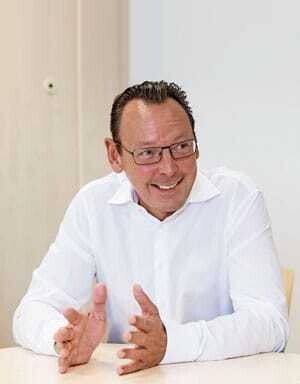
Motor vehicle industry: Mr. Lanzerstorfer, what interim assessment do you make of this year's business development?
Werner Lanzerstorfer: Moderate so far. Capacity utilization in the companies was poor. This started in January, then it got a little better, and June and July were actually very good. The first four months were, in fact, a medium-sized disaster.
Will the coming months be able to compensate for the declines from the first quarter?
Probably not quite. If we achieve the previous year's result in the passenger car sector at the end of the year, we will have escaped with a black eye, so to speak.
Things were mediocre in the private and fleet customer segments?
Both segments are affected because the damage has simply decreased.
Why do you think damage is decreasing?
On the one hand, this is due to the overall mileage, which is continually declining. And also the fact that automobiles are generally losing importance. It is also interesting that we have noticed for several years that the summers are now better than the winters in terms of damage. The second half of the year will therefore develop positively.
Declining market, pure cutthroat competition. How do you manage to be and stay successful?
With continuous market development and, above all, with a top team in which there is hardly any fluctuation and that is well coordinated and highly motivated. And of course with a very good product. We also notice this because we gain many new customers every year. Both in car repairs and in the commercial vehicle and industrial sectors.
What market developments are you observing?
The market - and I've been here for 25 years now - has declined steadily over the last ten years. In the early years, the declines were based on changes in technology, better products and higher coverage. In recent years we have seen declines primarily because capacity utilization in the workshops is decreasing.
What will happen next?
The decline in volume due to technology revolutions is over, you can hardly get more out of the products. However, the amount of damage is steadily decreasing. For the reasons mentioned above. Exceptions are of course local weather events such as hail or storm damage. But here, too, we observe that many vehicles are no longer repaired and are immediately classified as total losses by insurance companies. But this also has to do with the fact that drivers increasingly own inexpensive small and micro cars, for which the repair costs almost exceed the value of the vehicle.
How big is your team currently?
We have 15 field staff, seven technicians and two sales partners. Including the training center, depots and administration, 37 employees strive to ensure the well-being of our customers.
PPG recently launched the D8302 compact system. What advantages does this hardener bring?
The big advantage for our customers is that they can cover all areas from clear coat to filler with one hardener. This leads to a reduction in complexity. In addition, the costs related to storage are reduced. Only one hardener is used throughout the entire repair process, which saves time and minimizes sources of error. The new compact system can be used with a variety of existing and new paint materials from PPG, meaning the paint shop doesn't have to change anything. We have now converted almost all of our customers to the compact system. We will have the entire changeover completed by the end of the year.
Pappas Linz and Denzel, among others, already rely on Environbase HP from PPG in combination with the fully automatic Daisy Wheel mixing system.
At the end of the year we will have a total of ten users working with it. In addition to Pappas Linz and Denzel, these currently include renowned companies such as the Puck company in Sankt Veit - one of the largest paint shops in Austria -, Auto Gerster in Vorarlberg and the Glonner company in Kufstein.
How many will join next year?
I think we'll get back to ten. PPG remains the only provider to aggressively offer a fully automated mixing system. We also have the most experience in this area.
How do you see the future of the painting business?
What we always preach and teach in our trainings is efficient work. This is technically possible. However, in some companies the suffering is not great enough for them to actually work efficiently.
Which companies work efficiently?
The larger and, above all, the more specialized a company is, the more efficiently it works. 80 percent of our customers are independent paint workshops. They have to work differently than a car dealership with an attached paint shop, where this area is sometimes still neglected. Although many say that the paint shop is an important part of generating positive results. But returns are also coming under pressure in this area.
You have been managing director since 2003. What conclusion do you draw?
PPG Austria has more than doubled its sales and market share in the past ten years. We live and breathe paint and are now the only company that is purely a coatings company. I think we've done a lot right there. My thanks go to our employees and of course our loyal customers.
What was the biggest turning point?
Our industry is fundamentally a very conservative one. Revolutions de facto take place in decades. The water-based paint was definitely a turning point. We first introduced it in 1992. It took a good ten years for water-based paint to really take hold on the market. This was driven more by the law than by the willingness of the processors.
It used to be said that Germans and especially Austrians were very sensitive and accepting - in stark contrast to Americans, there were no scratches on their cars. Is that still the case?
A lot has changed because priorities have shifted. There is a change in values, especially among young car owners and families. Smartphones, tablets and spending on leisure time have become more important, while cars have lost out. The same applies here: the closer you get to urban areas, the less scratches or small dents bother drivers. But people also simply have less money available.