

 Suche
Suche
 Mein Konto
Suzuki GSX-R 1000 test – In the ring with Klitschko
One thing first: I am not unbiased about the new GSX-R 1000. When I was a little younger, money poor and self-confident rich, I owned two GSX-R 1000s in a row: a K5 and shortly afterwards a K6. It's not for nothing that the GSX-R 1000 is still the most popular to this day, as the 2005-2006 engine was simply amazing. And what can the new one do? Bread yourself. And really.

Suzuki GSX-R 1000 test – In the ring with Klitschko


ergonomics
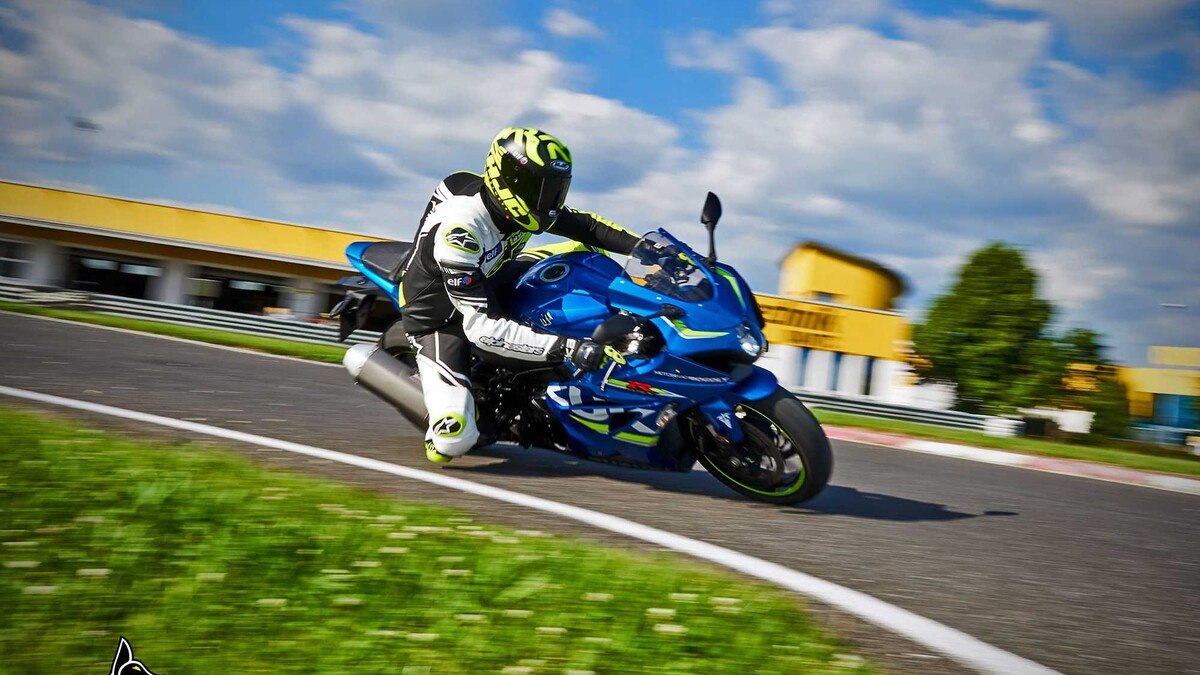
Typically for super athletes, the handlebars are placed low. If you want to see the streets, tilt your head back and enjoy the “monkey at the grindstone” position. It seems to me that the seating position of the new Suzuki GSX-R 1000 is definitely more strenuous than before: stub low, seat high (825 mm seat height). With a lot of pressure on your wrists you start rolling. From around 130 km/h the seating position is okay again, as an air cushion then builds up between the seat and the upper body, which you can support yourself on. Up to 100 km/h you constantly do push-ups. Note: If he has a hero's chest on his bike, he's probably riding a yoghurt cup. The footrests are placed pleasantly far back and allow for many gymnastics exercises on the sharp Suzuki. The ready-to-drive, fully fueled weight of the test model was exactly: 198.6 kilograms. That's a touch below the factory specification.
Handling
Super athletes are either demandingly agile or reassuringly stable. The GSX-R 1000 is the latter. This means that the driver has to give a clear steering impulse on the stub in order to put the 1000s into the curves. You won't find the razor-sharp handling of a 600 here. You will be rewarded with braking and high-speed stability that allows crazy cornering speeds. It took me a few days to adjust to it. But then, when you know that your body has to steer, it works by itself. Nevertheless, in the city or in tight corners you are forced to turn the handlebars a lot because the turn - typical of a superbike - is rather modest. The strength of the GSX-R 1000 model year 2017 is its high-speed stability. From a top speed of around 90 km/h, the GSX-R 1000 lies like a board on the road and literally cuts its line into the asphalt. The pilot has to work hard underneath to guide the slim athlete through the curves.
Engine/gearbox
What a hammer. If you put the accelerator to the full stop, you'll feel like you've caught a kiss from Klitschko's left hand. Boom! And peace. But you shouldn't waver for too long, because the acceleration of the 184 hp bike (measured at the rear wheel!!!, factory engine output: 202 hp) is so brutal that it really pulls you backwards and your neck becomes stiff if you forget to make yourself small behind the cockpit. Violent. Really intense. As a former K5-K6 driver, I can confirm: The engine has the boom from the bottom and in the middle that it did back then, only that there is a hammer coming out of the top, which is just more perverse. The torque of 118 Nm ensures that it doesn't matter which gear is selected. A small twist of the throttle grip and the GSX-R takes off. I rode the normal GSX-R 1000 without R, so there was no quickshifter. Unfortunately that was missing. The thought of no longer having to dome when tearing open brings tears of joy and fear in equal measure. But good news: the quickshifter can apparently be retrofitted. The Suzuki dealer knows more. Otherwise, the gearbox is typical GSX-R: buttery smooth, precise, crisp. That's how it has to be.
Undercarriage
Well, what should I write there? I and my talent will not reach the limits of the GSX-R chassis in this lifetime. And I even say: not even on the racetrack. Basically, the chassis on the test motorcycle was very tightly tuned, but since both the front and rear are completely adjustable, the right setup can be achieved with a little time. The change clicks definitely had an effect. The electronic steering damper does its job unobtrusively. A good sign, in my opinion. Even when braking hard, the front remains stoically stable and does not dive deep suddenly, but with a noticeable progression that will delight those who brake late. Otherwise, the GSX-R 1000 simply ironed out everything that was in the way - sometimes more direct, sometimes softer. If you only drive on the road, you can save yourself the extra charge over the R from a chassis perspective. Ambitious hobby racers who race for the Cup podium will probably also be able to get by with it. An individual adjustment of the chassis will almost make more sense.
Brakes
Ring riders are aware of the limitations of the GSX-R brakes so far. There were always fading problems with the previous models. Suzuki has now reacted and is using Brembo monoblock brake calipers and Brembo T-Drive brake discs with a diameter of 320 mm. This is really the finest goods. Only when it comes to the radial brake pump do you stick to the 19 mm Nissin pump - for whatever reason. At the ÖAMTC driving safety center in Teesdorf, I still had a brake lever that became longer after a few quick laps. According to cross-research on the web, it could be the ABS. If you switch it off, the pressure point should remain constant. But honestly: Before I deactivate the ABS in street or hobby racer mode because of slight fading, I tend to leave it on because I prefer the extra safety. And: I only got into the ABS control range twice with the front brake. At one point I almost didn't notice. Clearly speaks for ABS.
Noticed
The sound from the airbox. Yes, it has to scream, rattle, hiss and growl. That's the typical GSX-R sound: nasty, but not flashy. Only at around 6500-7000 rpm on the motorway in sixth gear is there likely to be frequency overlap, as you can feel an unpleasant humming/droning under your helmet at a constant speed. The exhaust is huge – Euro 4 is to blame – but the sound is right. And: How small, delicate and compact the big 1000 is. The rear is actually really tiny. The previous models were significantly more corpulent. The traction control kicks in very gently and reduces the power surprisingly gently if the slip on the rear wheel becomes too great. Works exactly as it should.
Failed
Some readers will slap their foreheads with their hands, but the sitting position is simply too strenuous for me (1.85 meters) to have fun on the road for more than 30 minutes. Maybe I should do more yoga to get the flexibility of a real racer. But still, if you're not in full-on mode with the knife between your teeth, the uncompromising sitting position is really strenuous and demands a lot of stamina from the rider.
Test verdict: Suzuki GSX-R 1000, by p.bednar
More information about Suzuki GSX-R 1000
With kind support from TOTAL Austria
More action photos from the test drives can be found on Instagram: apex_moto_at
Or follow us on Facebook: Apex Moto