

 Suche
Suche
 Mein Konto
Test Ducati Hypermotard 950 - Finally predictable
The new edition of the Ducati Hypermotard is a celebration for Italophile supermoto junkies. But does the new one keep what it promises? Is it even a supermoto anymore? And how does it compare to the original model? A test that brings many surprising findings.

Test Ducati Hypermotard 950 - Finally predictable
ergonomics
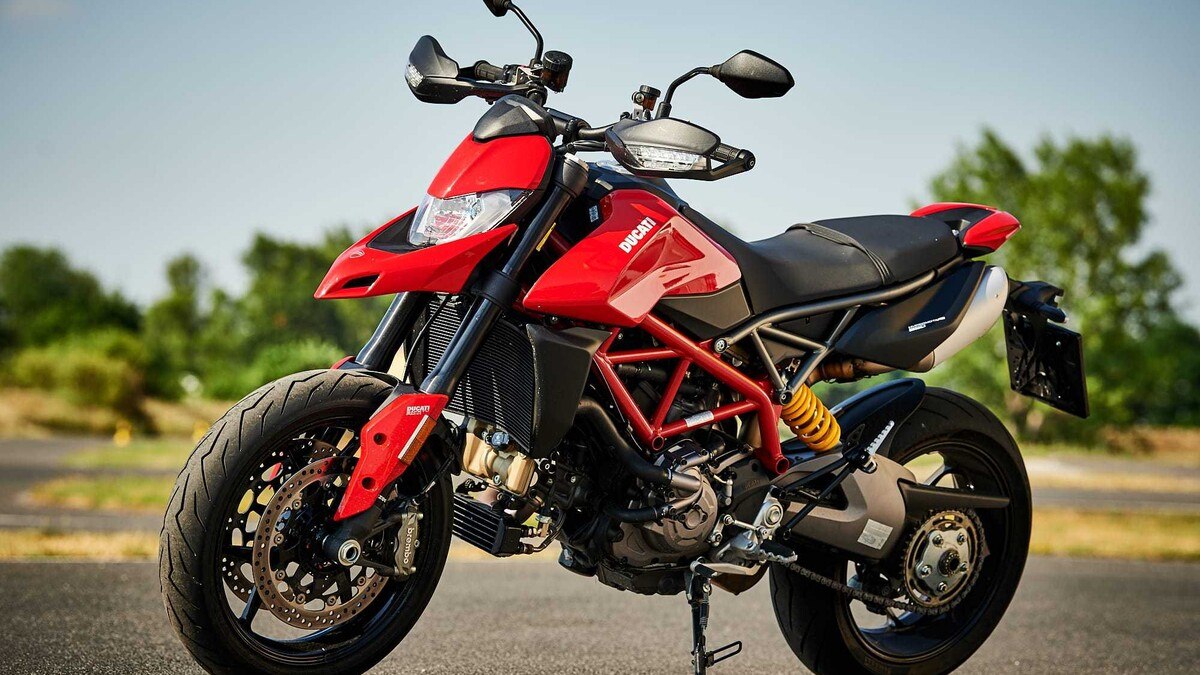
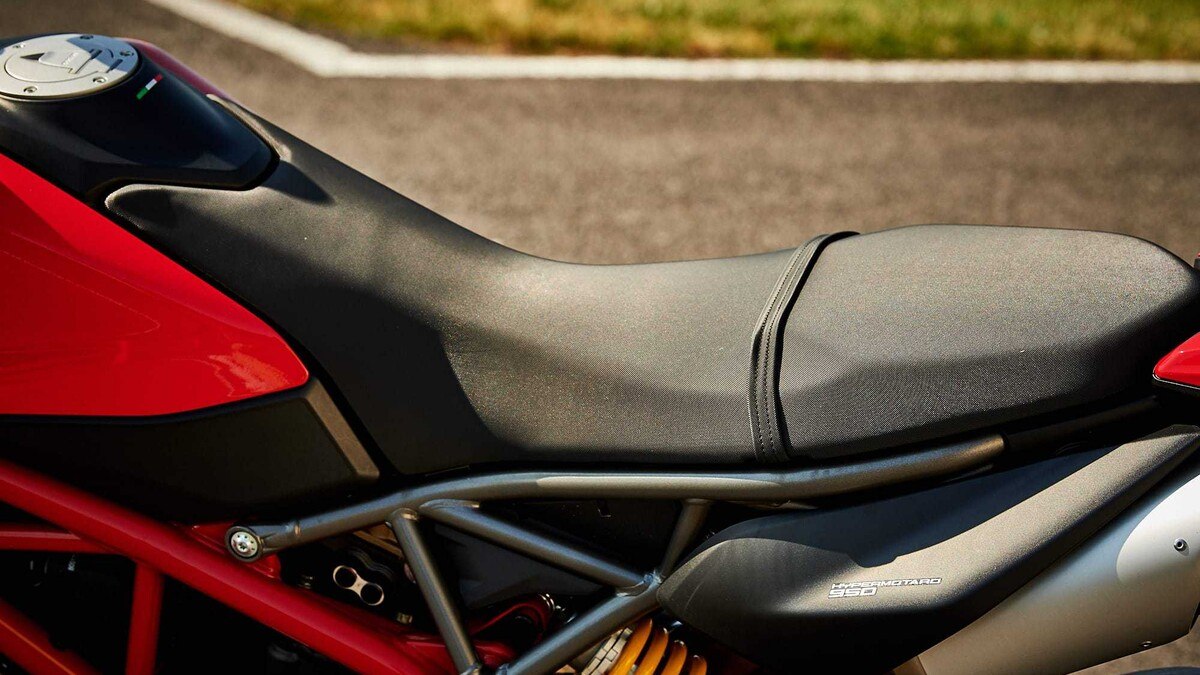
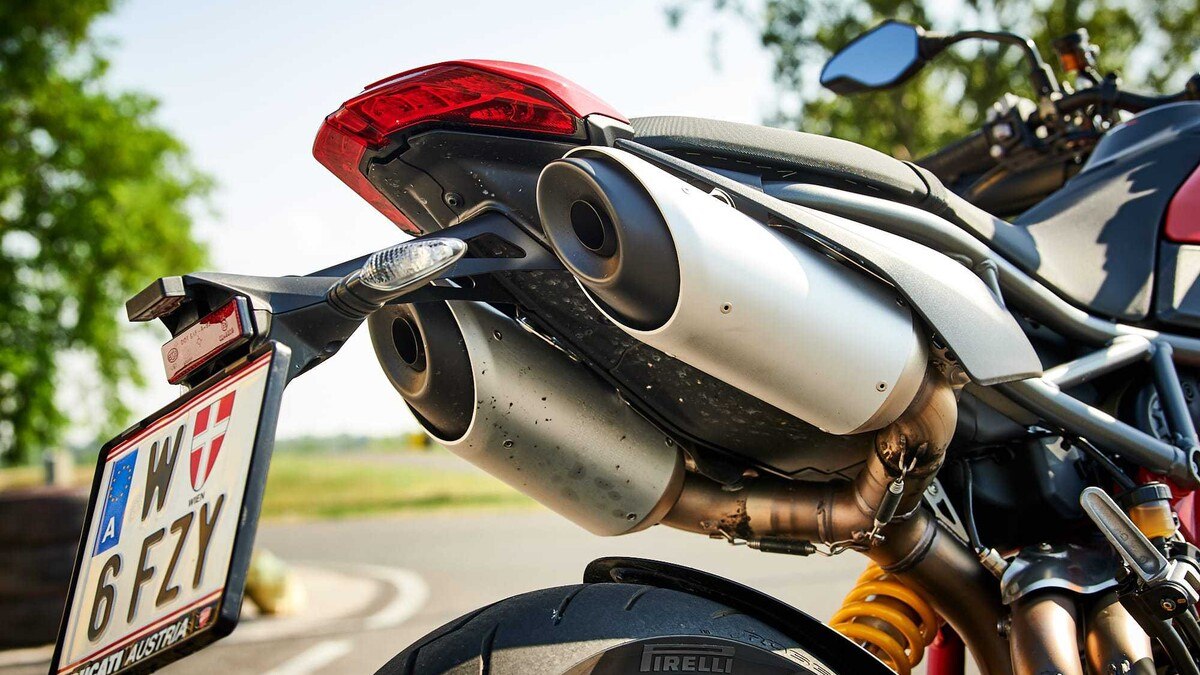
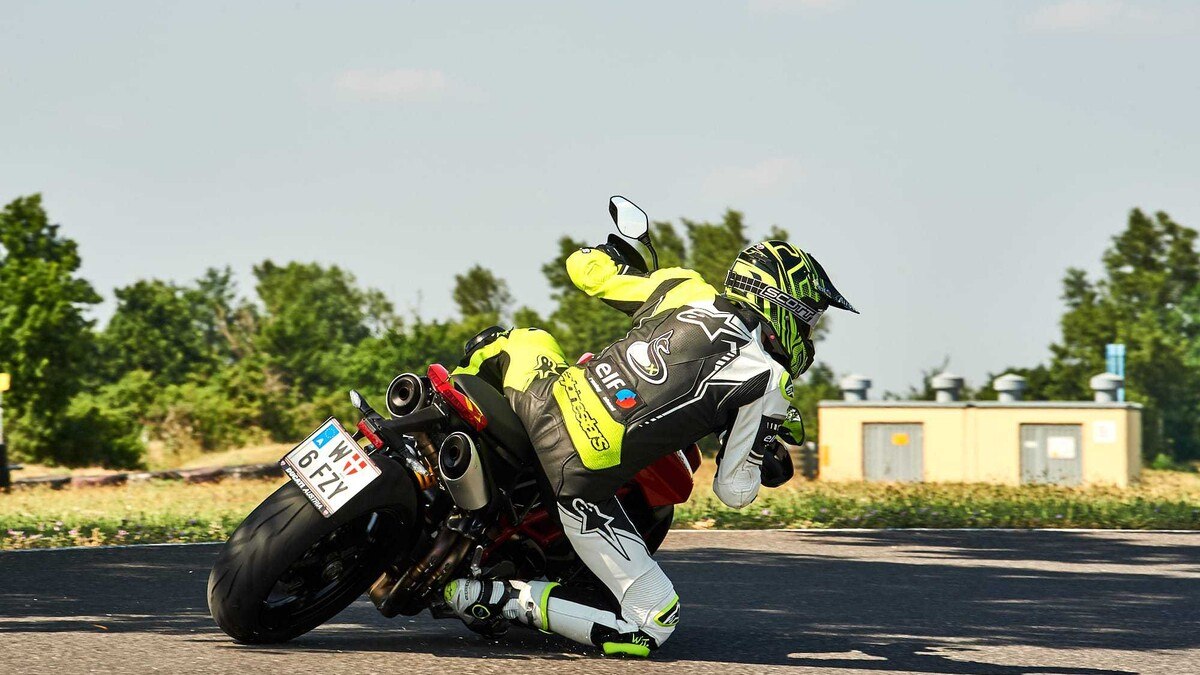
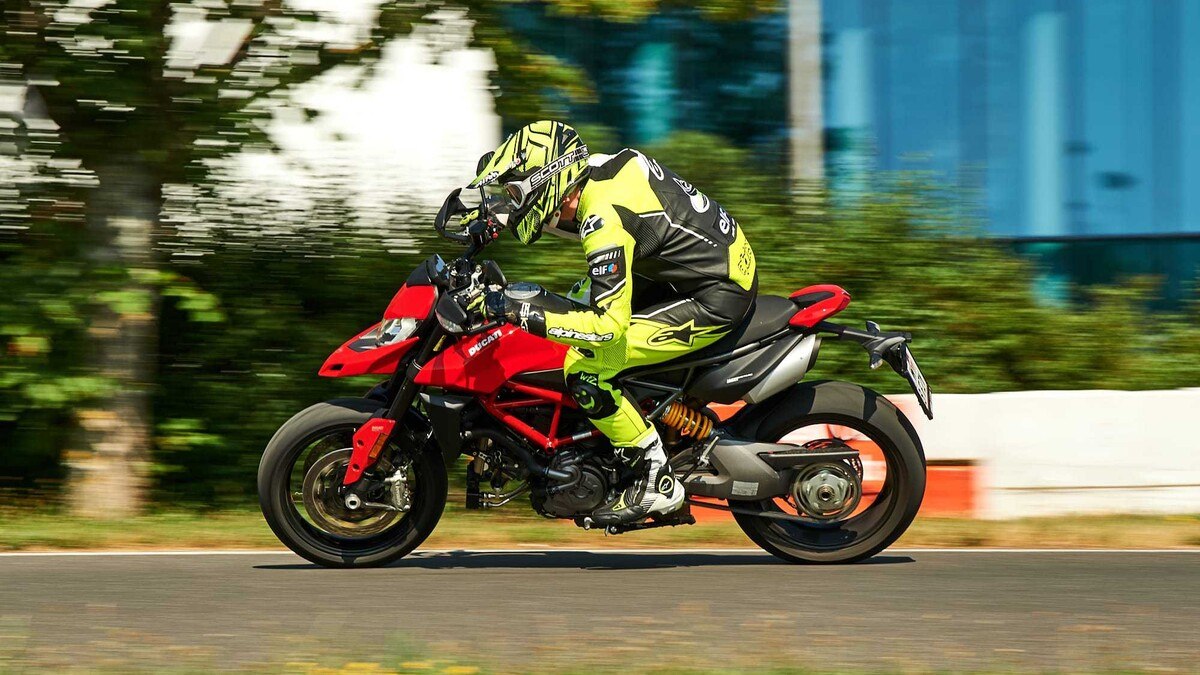
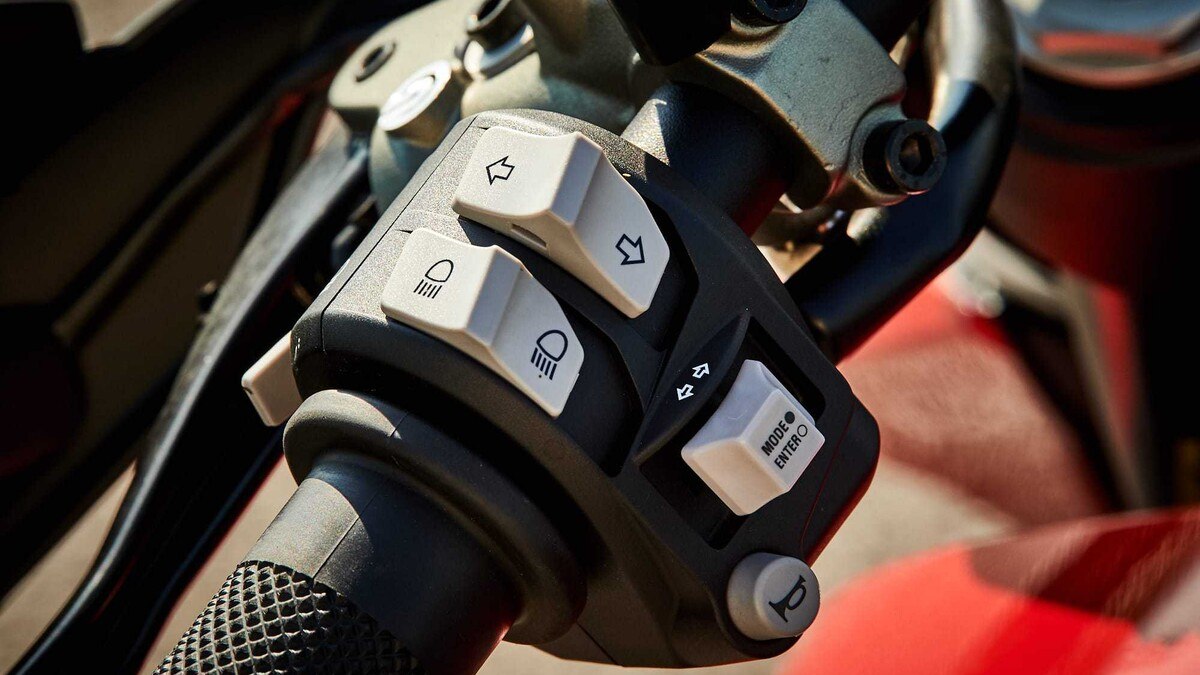
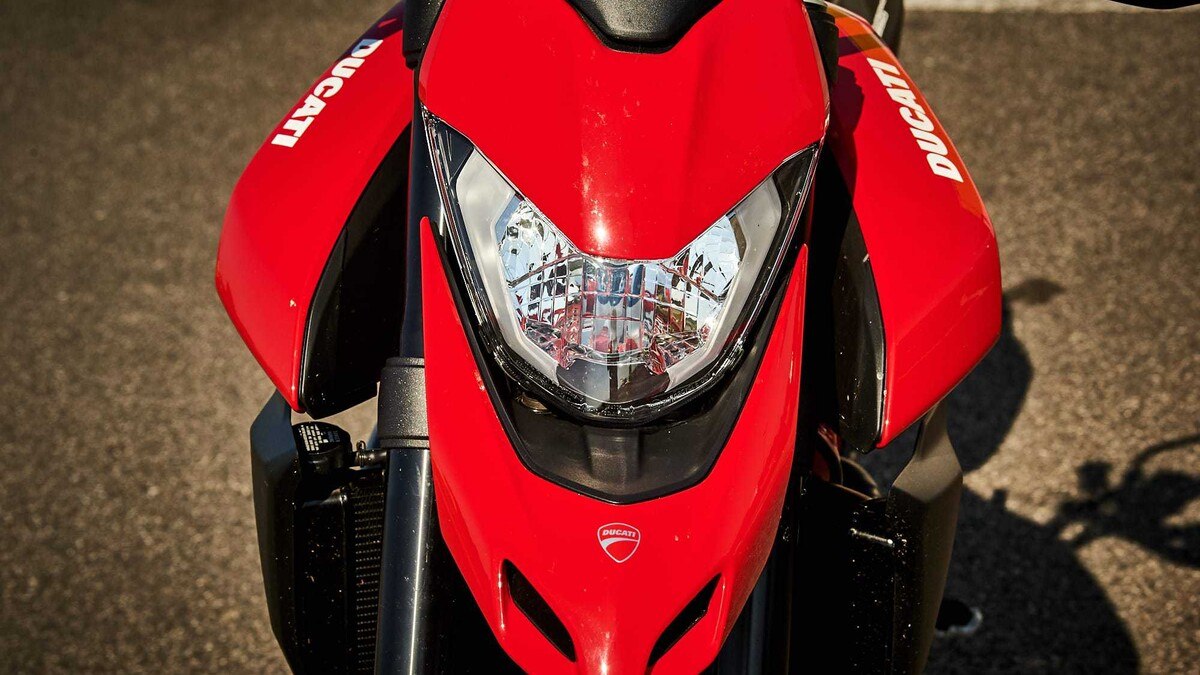
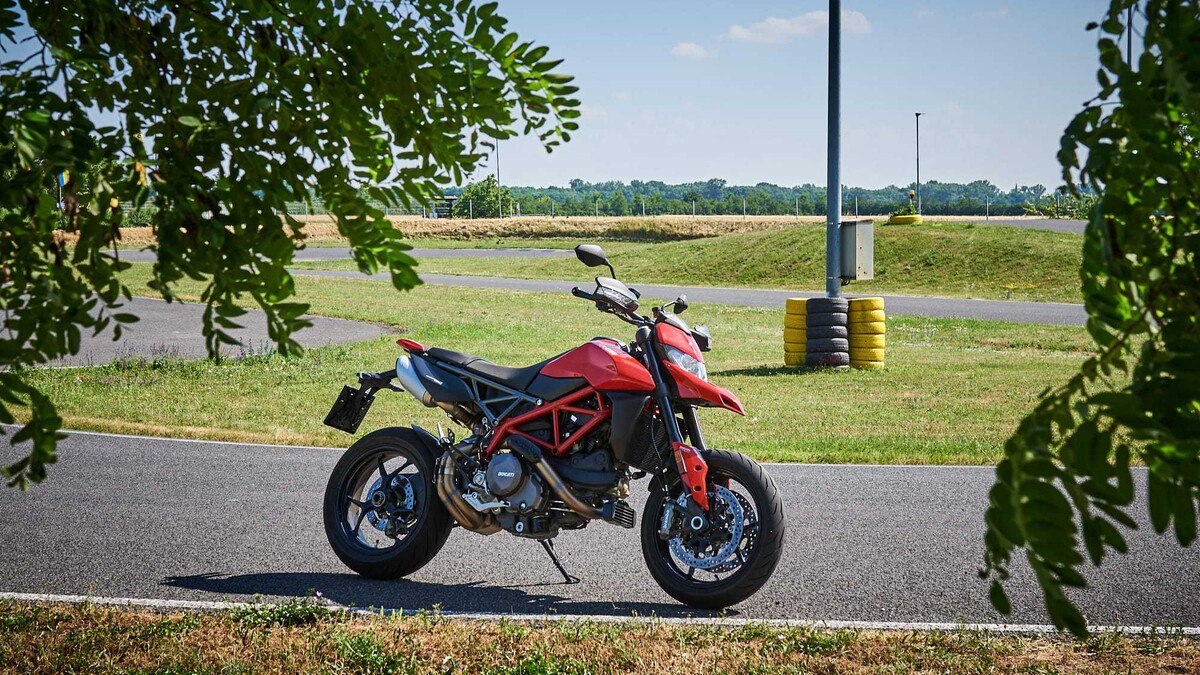
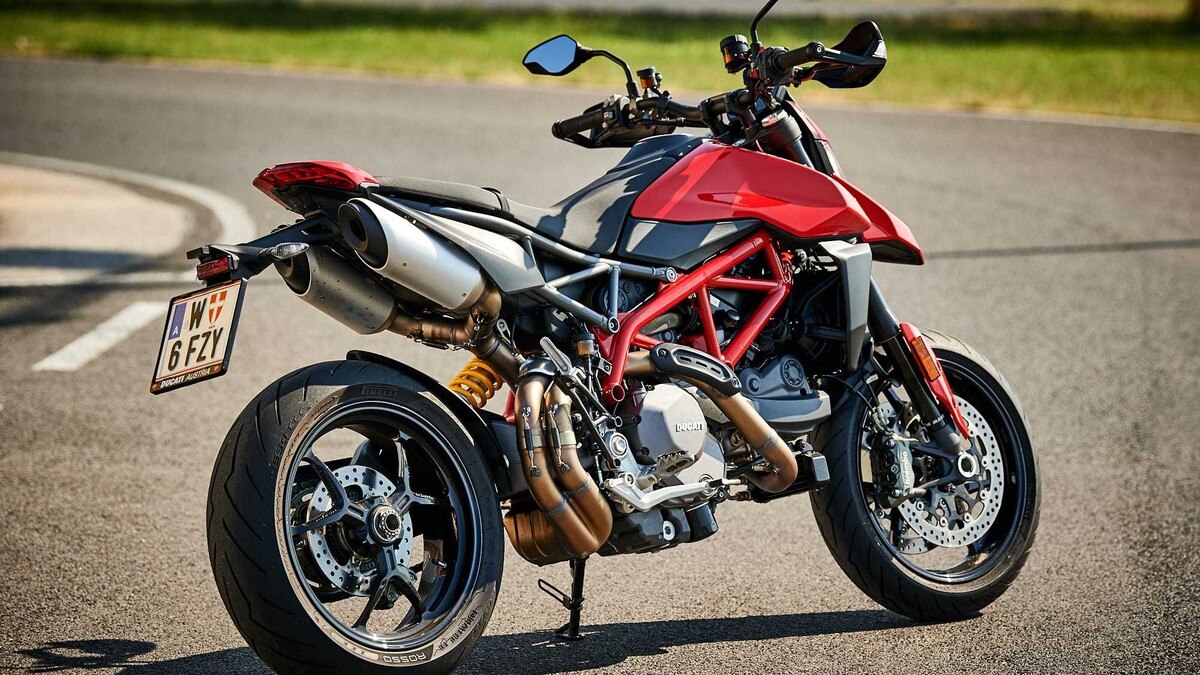
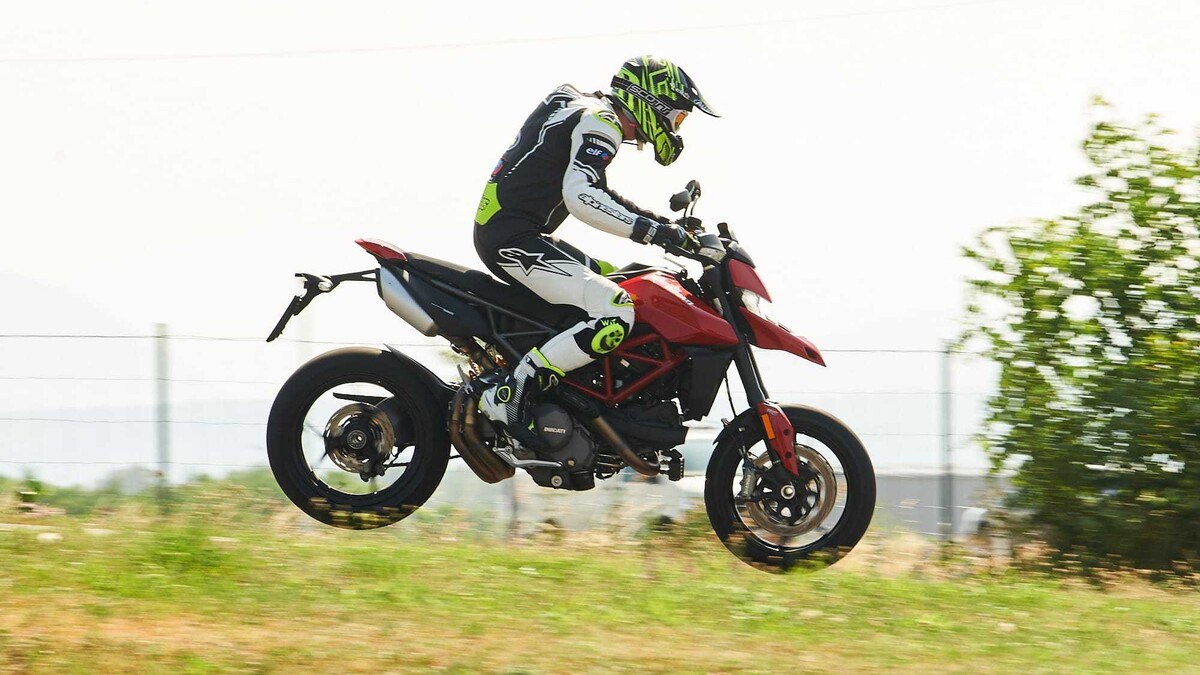
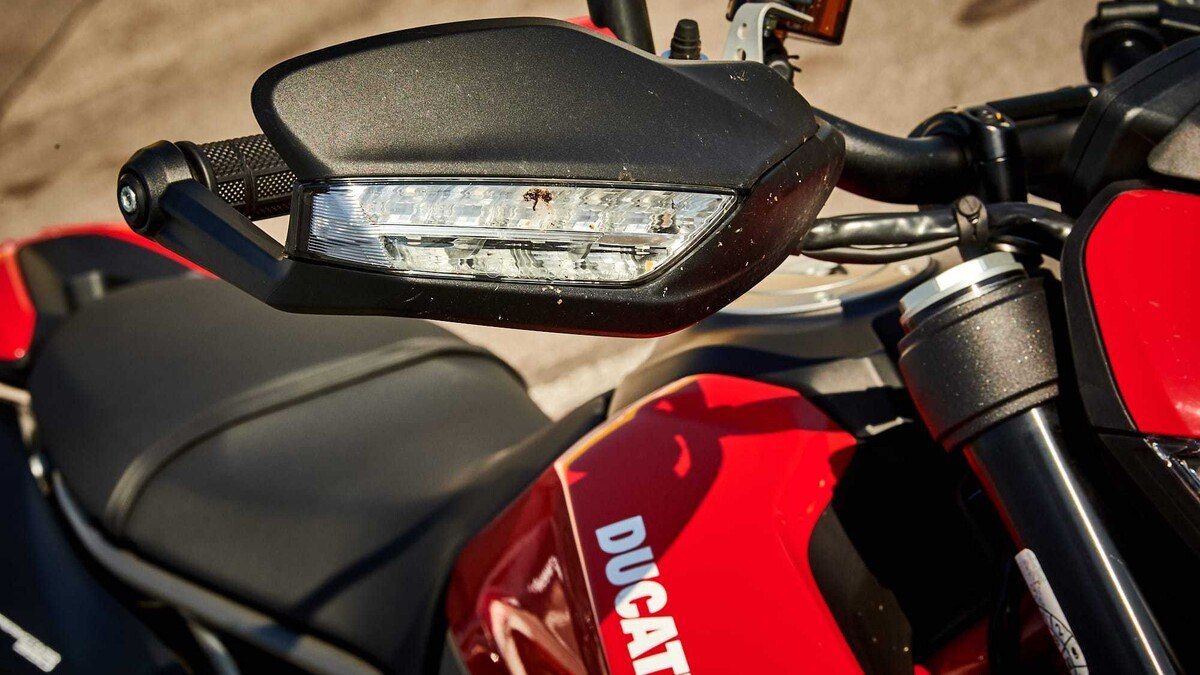
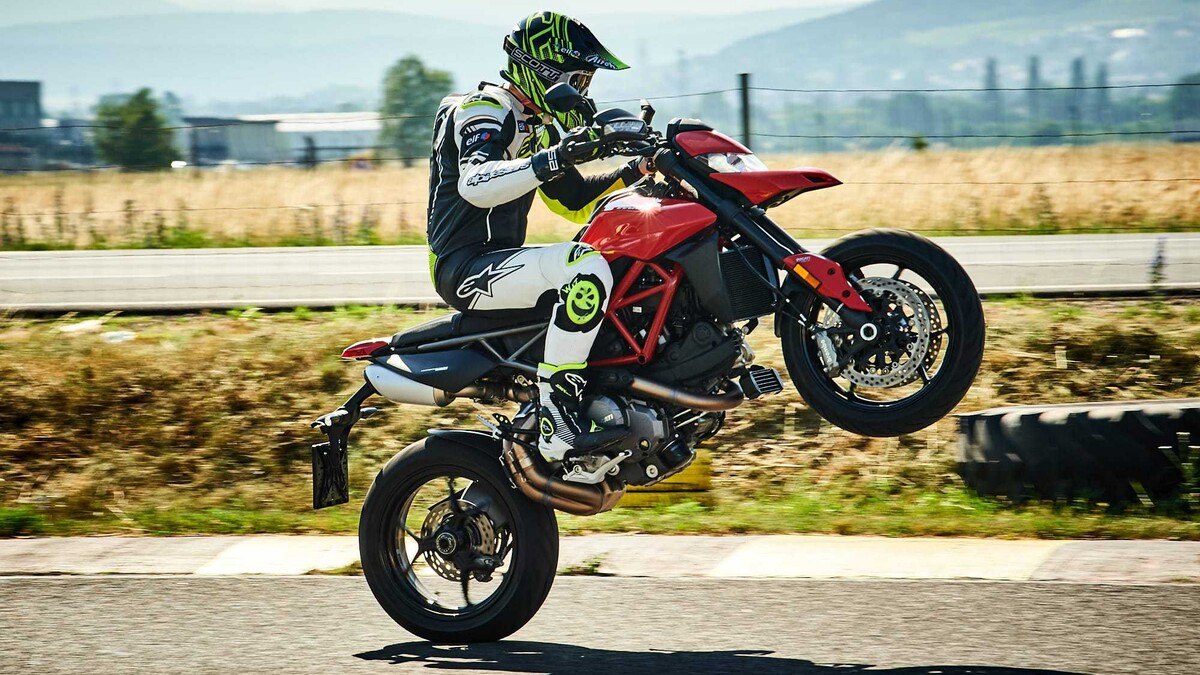
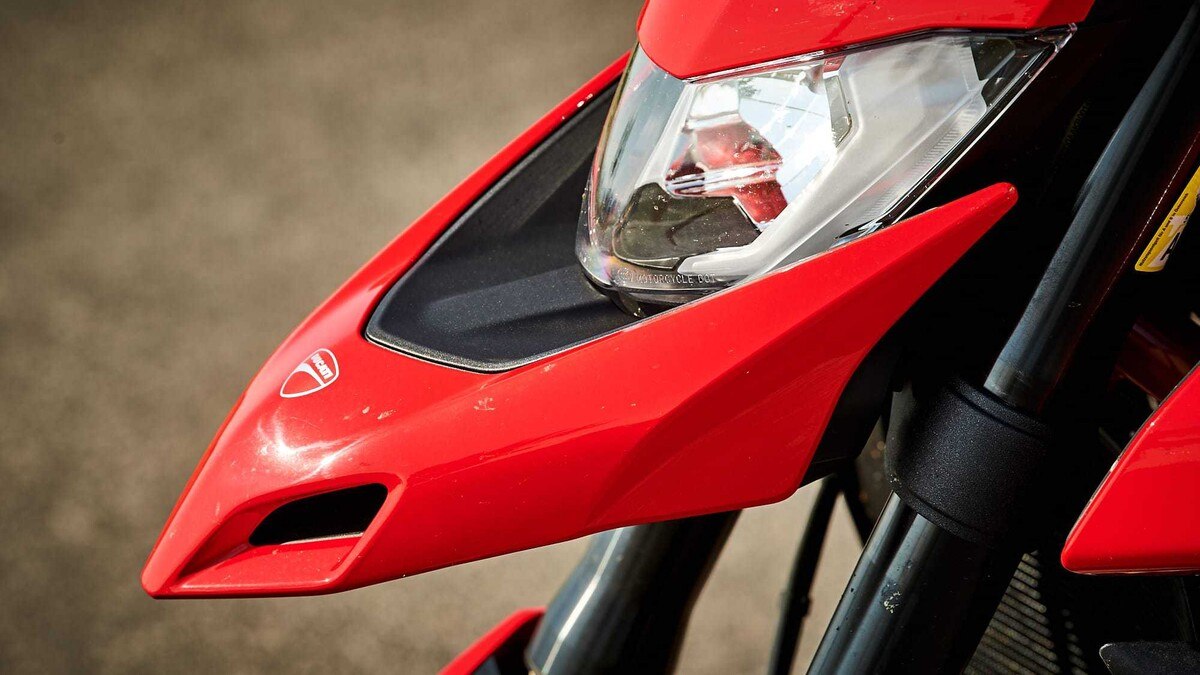
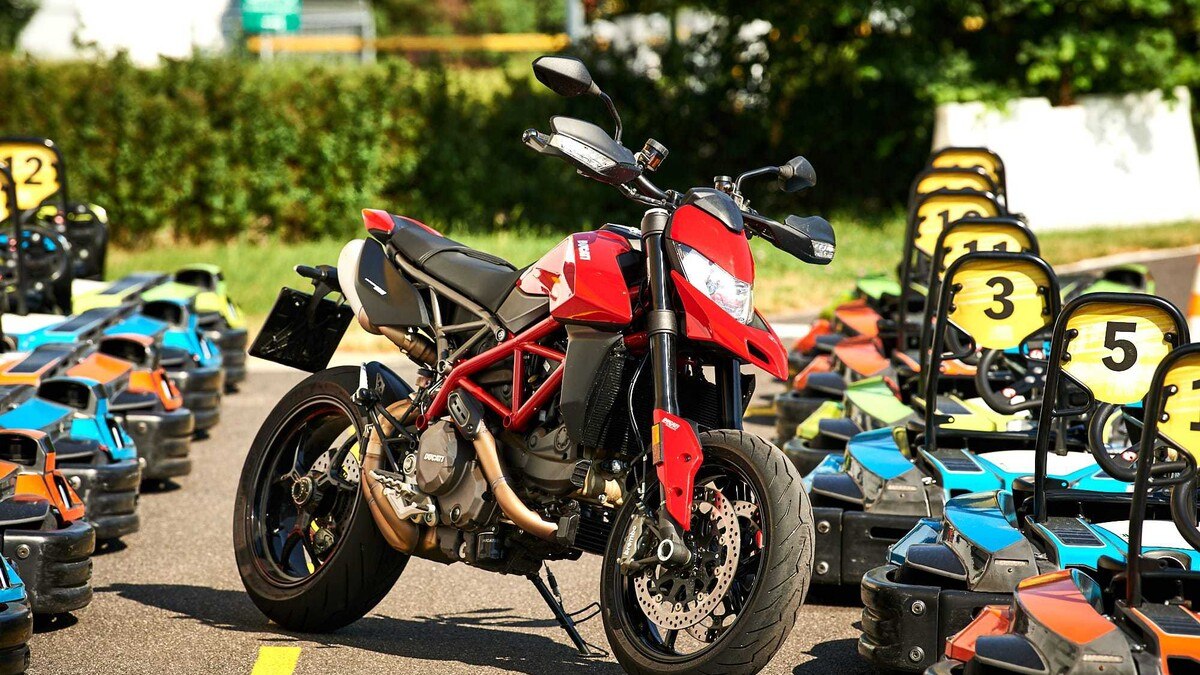
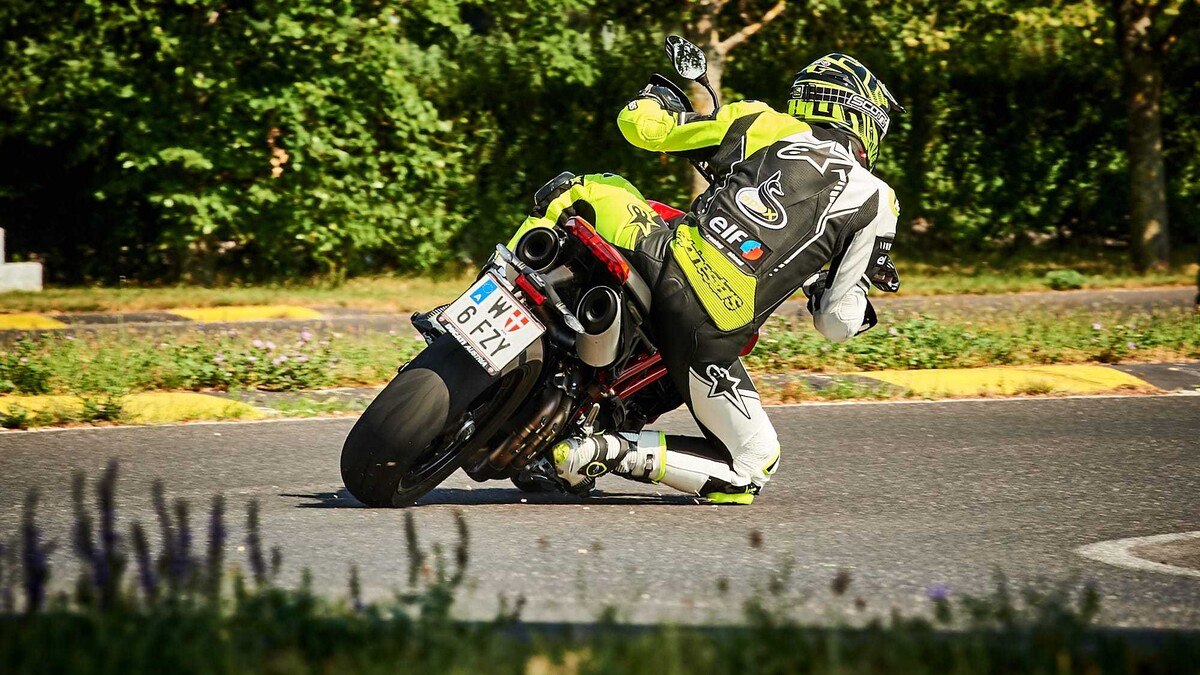
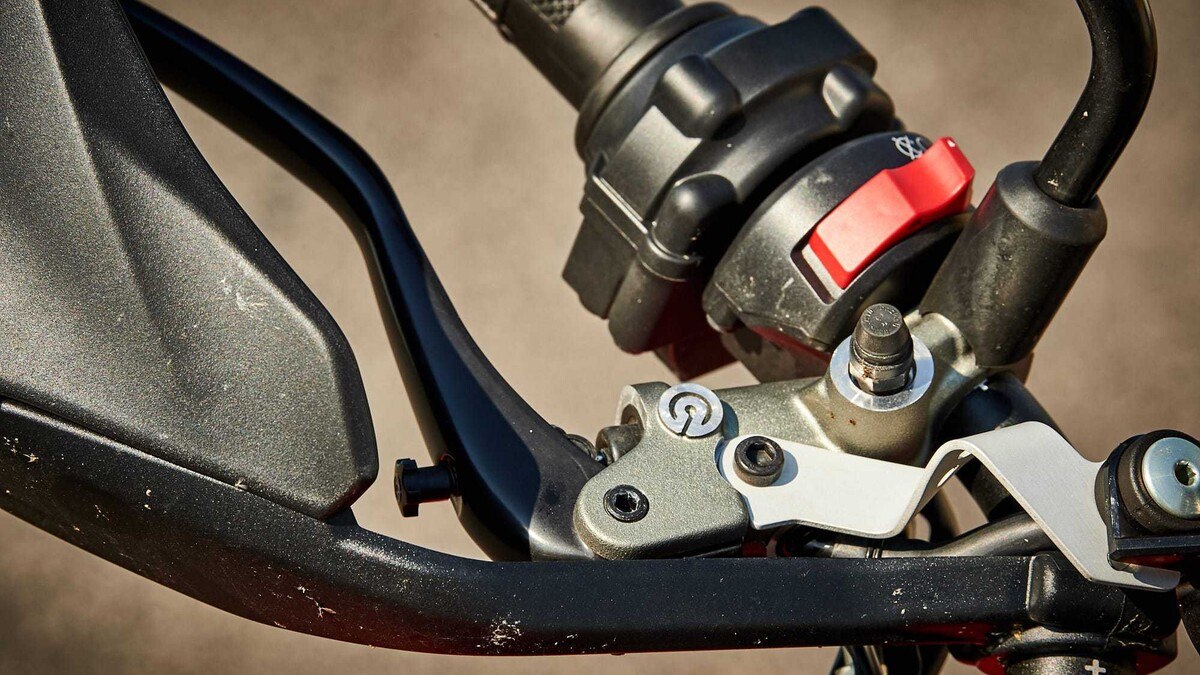
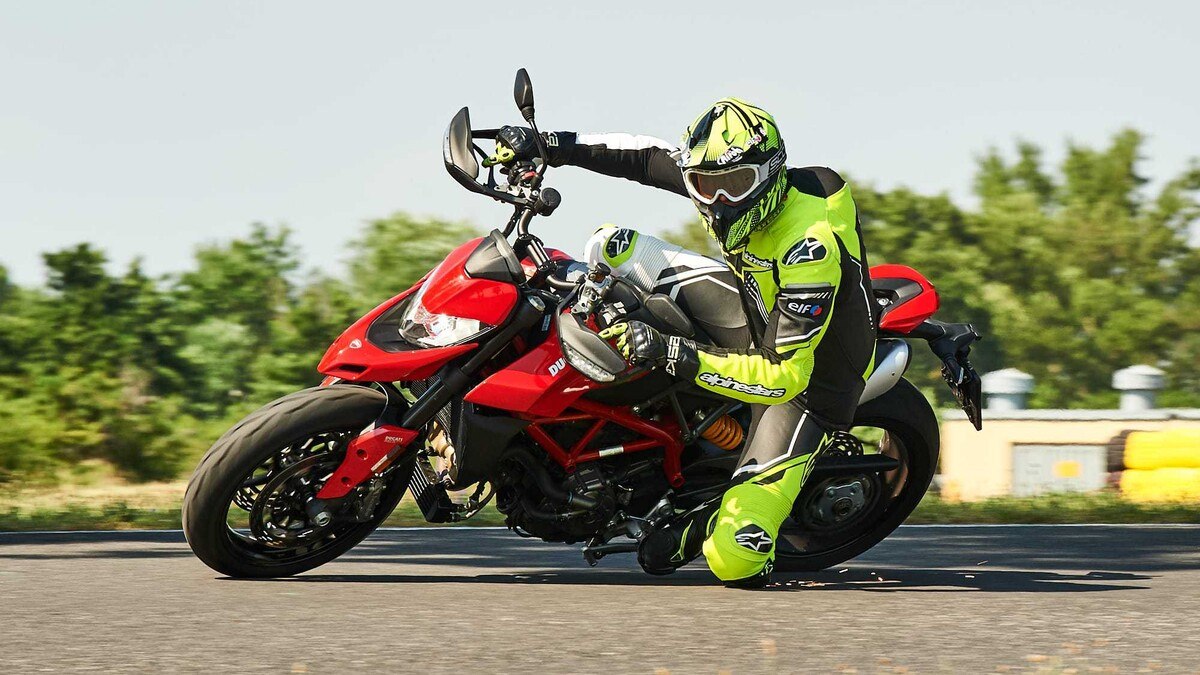
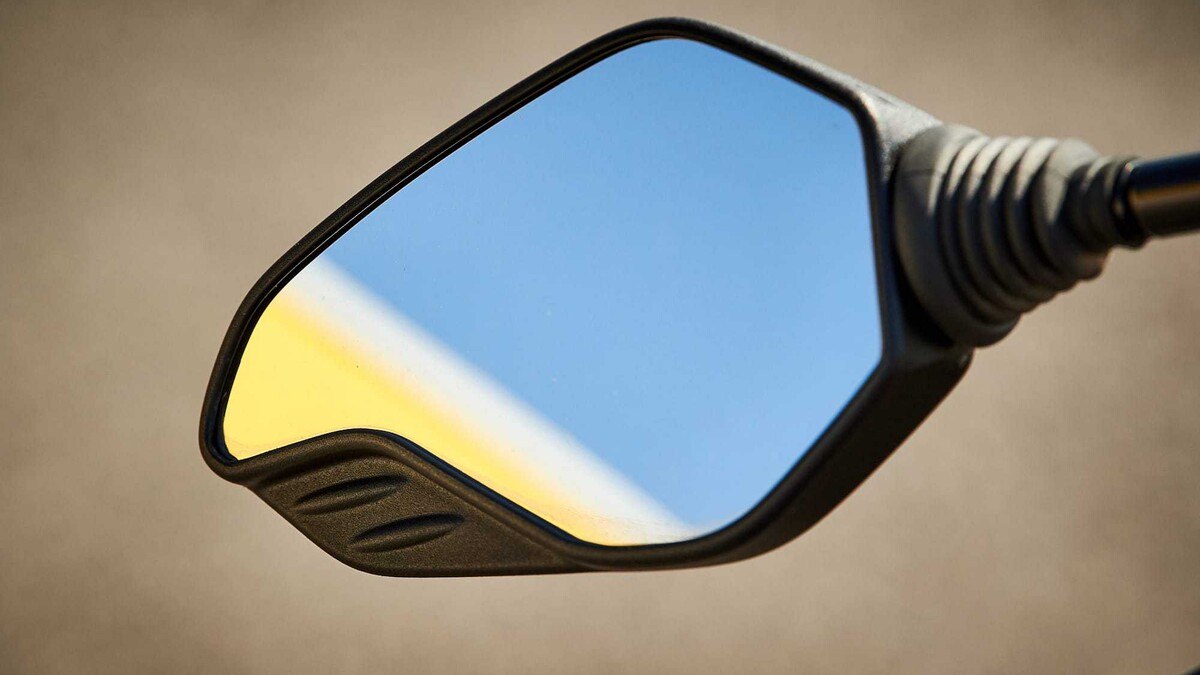
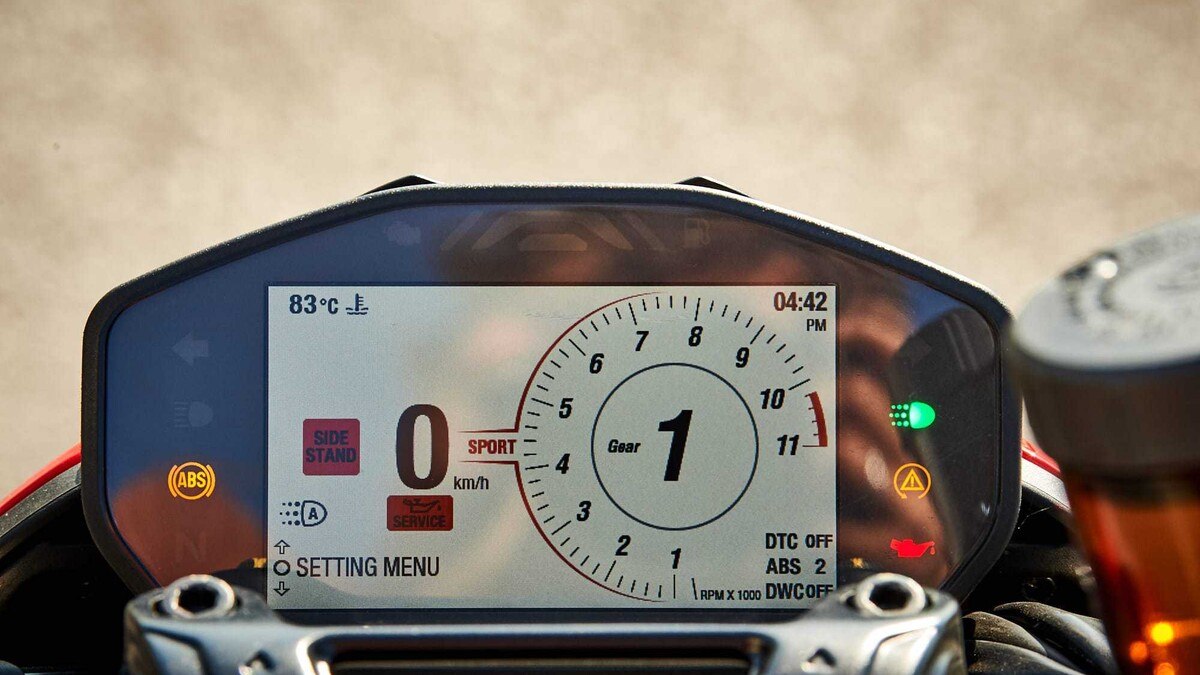
The new Ducati Hypermotard 950 is visually very similar to the original model Hypermotard 1100/S from 2008, on: double exhaust under the rear, small rear spoiler above the taillight, bolted-on tubular space rear frame, small tank (14.5 liters), duckbill, upright but aggressive seating position. In purely ergonomic terms, I mean: An evolution of the original model, except for one big difference: you sit less radically front-wheel oriented on the Hyper 950. While the 1100 was a magnificent, radical megamoto bike, the new Hyper 950 looks much more well-behaved, tame, and ergonomically more naked bike-like. You don't sit on the Hyper, but rather in it, despite the seat height of 870 millimeters. Real supermoto riders from the KTM 690 SMC-R or that Husqvarna 701 the handlebars and seat will be too low; not front wheel oriented enough. Anyone who switches from a naked bike to the Hyper will think: a great, upright, active riding position. In short: On the single-cylinder supermotos, the rider sits much more aggressively, always ready to stretch out his legs and race around the corners in sumo style. On the Hyper you tend to extend your knee and slide your butt backwards. A small step to the pillion part of the one-piece seat offers enough support. There is no wind protection on the Hyper. The footrests are mounted comfortably far forward and the knee angle is a little more relaxed than on a Ducati Monster or comparable naked bikes. Optional benches increase or reduce the seat height. The standard seat is well suited for tours of up to 350 kilometers per day, after which you need a lot of firm seating because the bench wears out and your butt starts to hurt. The hand protectors with integrated indicators look cool, but are immediately gone in the event of a fall. The mirrors are impractical due to their shape, as the mirror glass is cut out exactly at the lower outer edge. The brake and clutch levers are adjustable in many ways, the gearshift and foot brake levers are only minimally adjustable. Thanks to the narrow crotch arch, even smaller riders can reach the ground easily. The fully digital, colored display is a feast for the eyes, the tachometer is easy to read, but the gear indicator is omnipresent. Only the switching time from the white to the black background (light or dark environment) could be a bit faster. When ready to drive, the Hypermotard 950 weighs 200 kilograms. The SP is two kilograms lighter and weighs 198 kilograms. The fact that the SP is two kilos lighter is thanks to a few carbon parts and the lighter forged wheels.
Engine/transmission
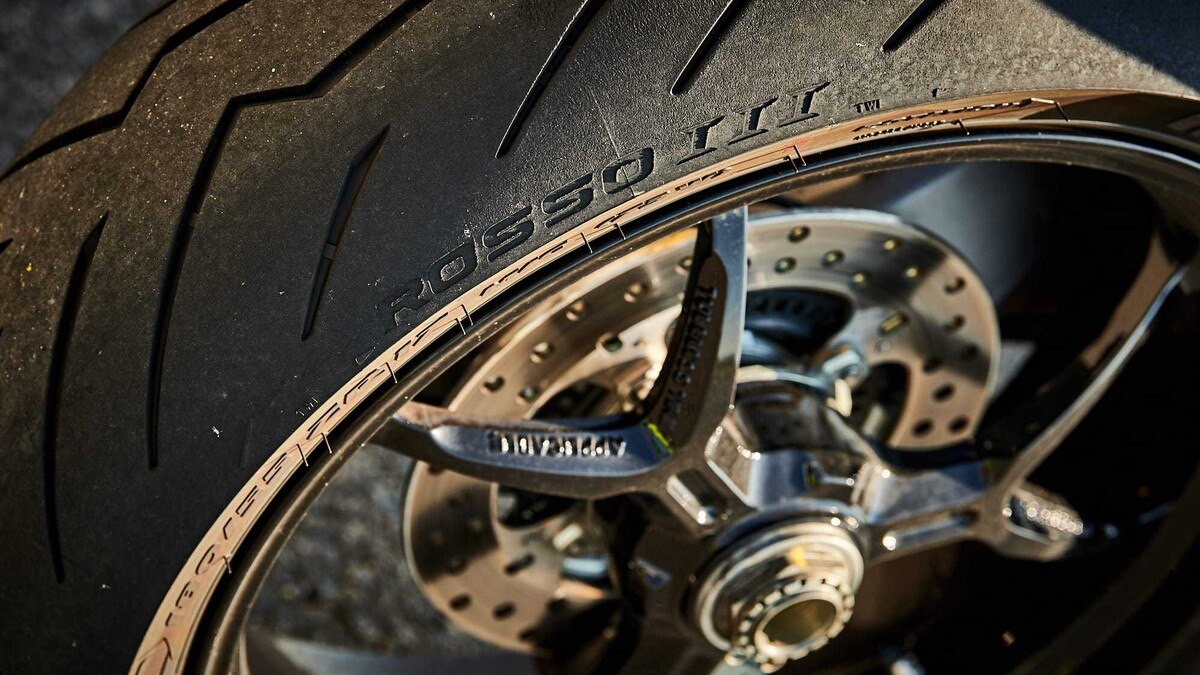
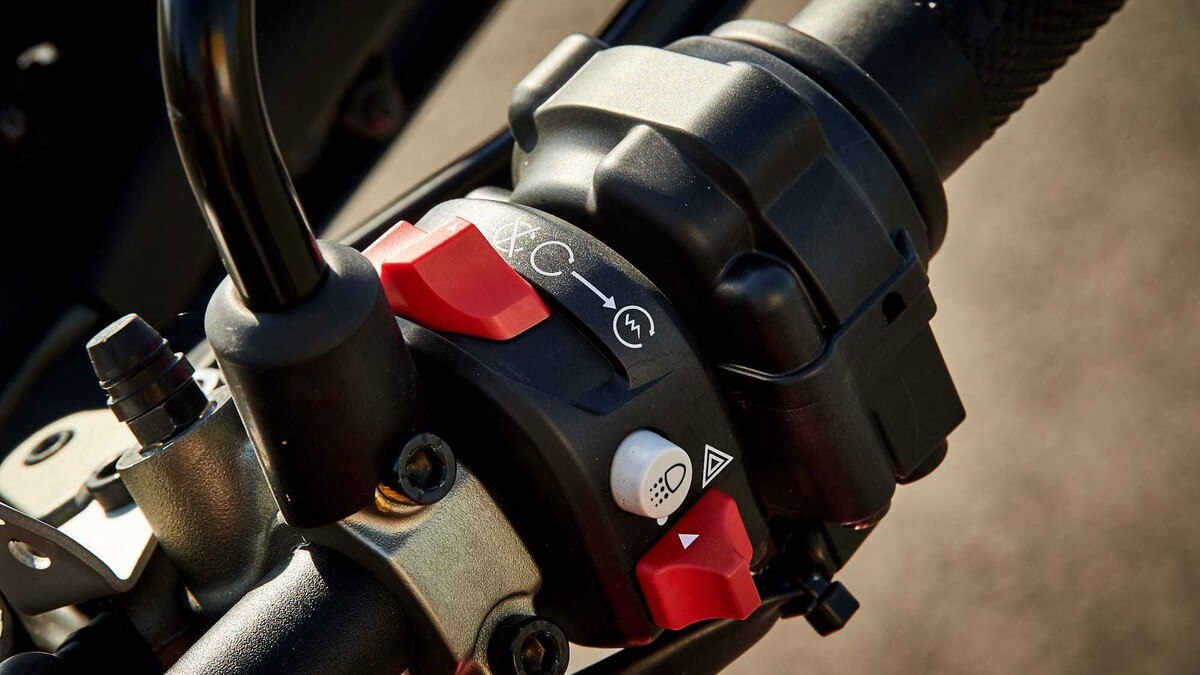
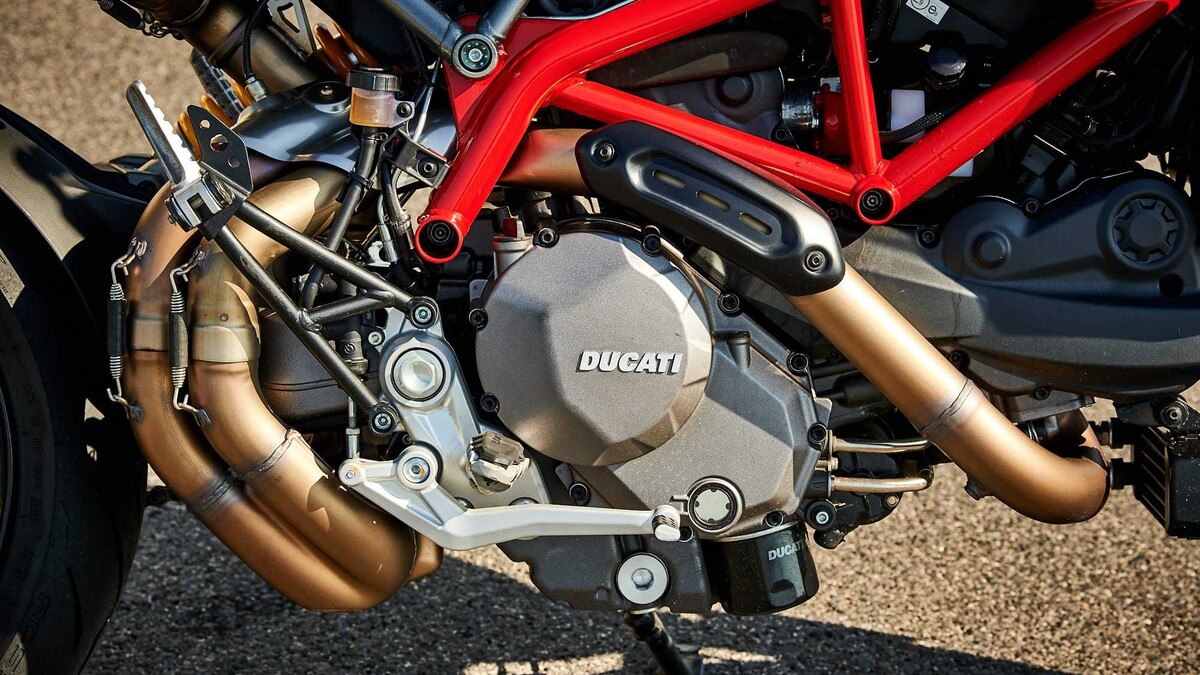
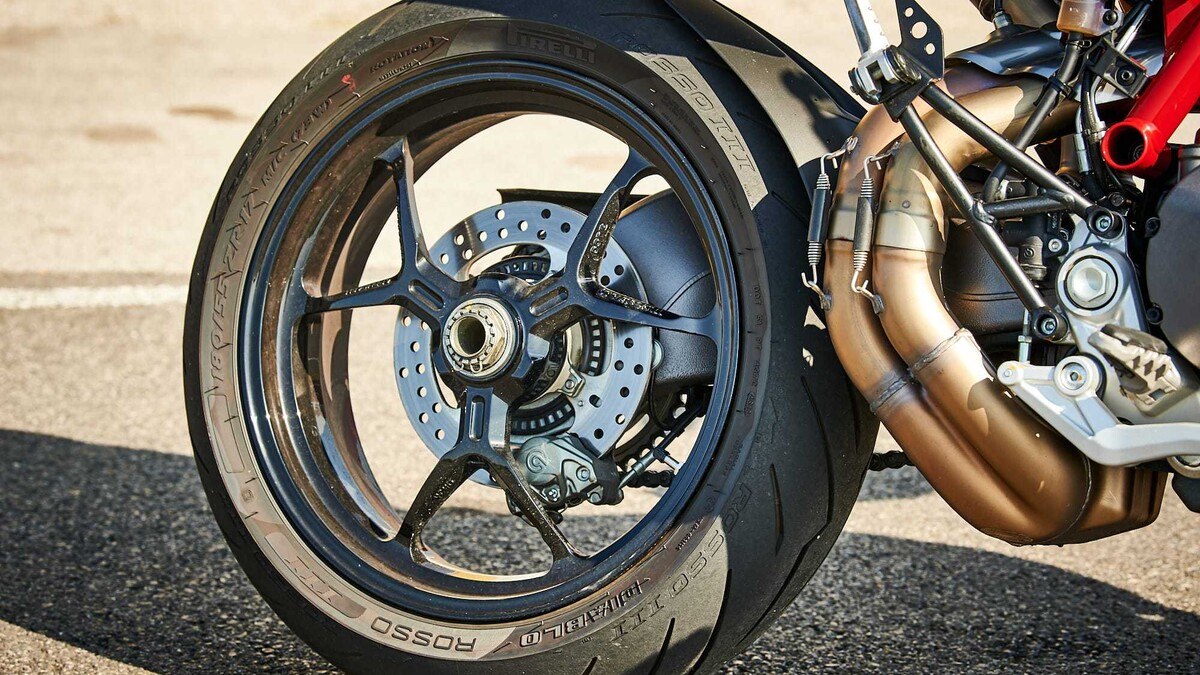
The 950 cheats a bit when it comes to the engine name. In fact, the displacement is “only” 937 cubic centimeters. From this the Ducati draws at least 114 high-revving horsepower (84 kW) and a very present 96 Newton meters of torque. Thanks to lighter clutch and alternator covers, lighter shift drums and magnesium cylinder head covers, the engine is around 1.5 kilograms lighter than the previous model, the Ducati Hypermotard 939. Ducati has also made a number of changes to the engine, including the compression ratio, which is now 13.3:1. The power is controlled via the ride-by-wire throttle grip. The Euro 4 bike is surprisingly smooth for a large-volume two-cylinder. Of course, the engine rumbles a bit below 3000 rpm, but for a Ducati-Vauzwo the engine - despite the poor Euro 4 tuning - is surprisingly low in vibration and the throttle response is soft even when cold. Once the engine is at operating temperature, you want to kiss the engineers with joy: the throttle response becomes even softer, the load change reactions are extremely low - very untypical for a Ducati V engine - and the revving nature of the water-cooled engine is impressive. Because around 80 percent of the torque is already available from 3000 rpm, the Hyper pushes powerfully out of the low rev range, has a soft, strong middle and at the top, where the old two-valve 1100 was no longer able to improve, the Hyper 950 pushes really nicely again. A real burner engine. Because: Subjectively, the 114 hp seem even more spectacular and do not overwhelm the rider or the tires. Yes, Ducati has of course given the Hyper the latest electronics package. We're talking about lean angle-dependent traction and wheelie control and three different riding modes. And if you pull the electronic throttle really hard at the apex of the curve, the electronics also work a bit. But the grippy Pirelli Diablo Rosso III rubbers can easily cope with the performance on normal asphalt. Fine detail: Ducati was able to extend the service and maintenance intervals again for the 11° Testastretta. After the obligatory 1000 kilometer service, the Bella only needs to be freshened with an oil service every 15,000 kilometers or once a year. Every 30,000 kilometers the valves have to be checked, possibly adjusted and the timing belts changed. A massive cost saving in maintenance. The original model needed to be thoroughly checked every 12,000 kilometers; the valves had to be inspected every 24,000 kilometers. The transmission receives high praise because it can be shifted very precisely and smoothly. Some press reports criticize the high manual force required by the hydraulic clutch. I don't find the manual strength to be particularly high - in the past there were significantly tighter clutch levers to pull. By the way, the anti-hopping clutch is standard. In the SP version, the quickshifter with blipper function is installed as standard. Standard hyperdrivers should also treat themselves to this goodie, as the automatic gearshift works very well in both directions and noticeably relieves the rider's load, especially when braking hard and downshifting.
Undercarriage
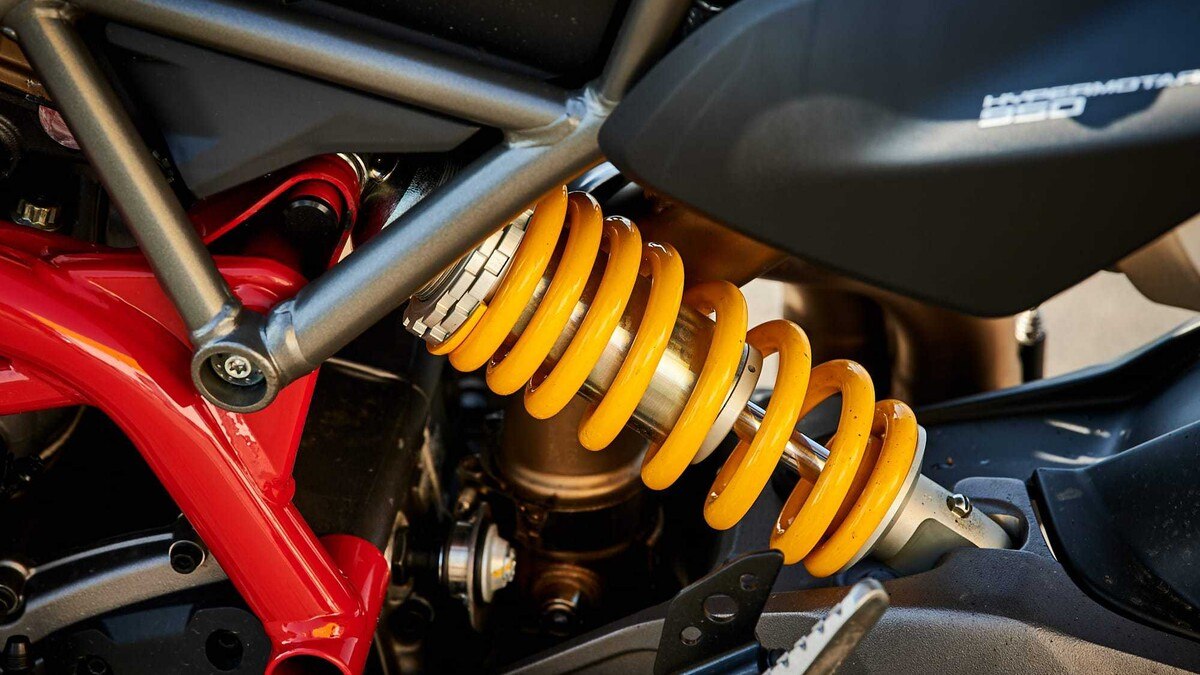
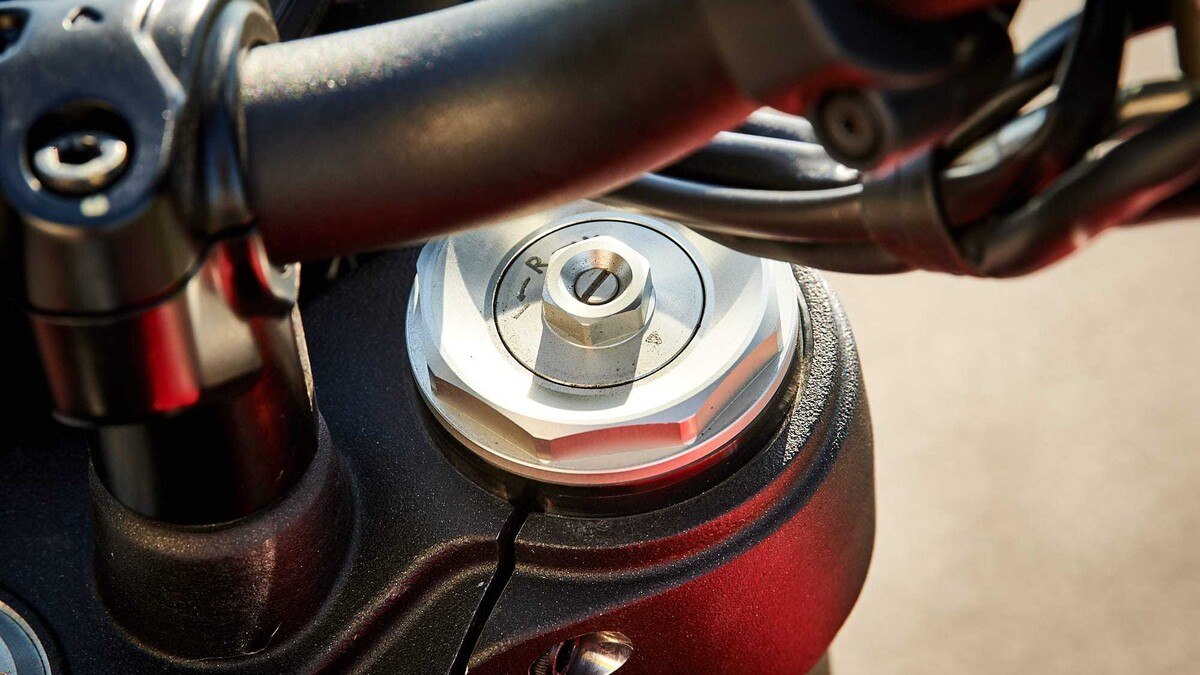
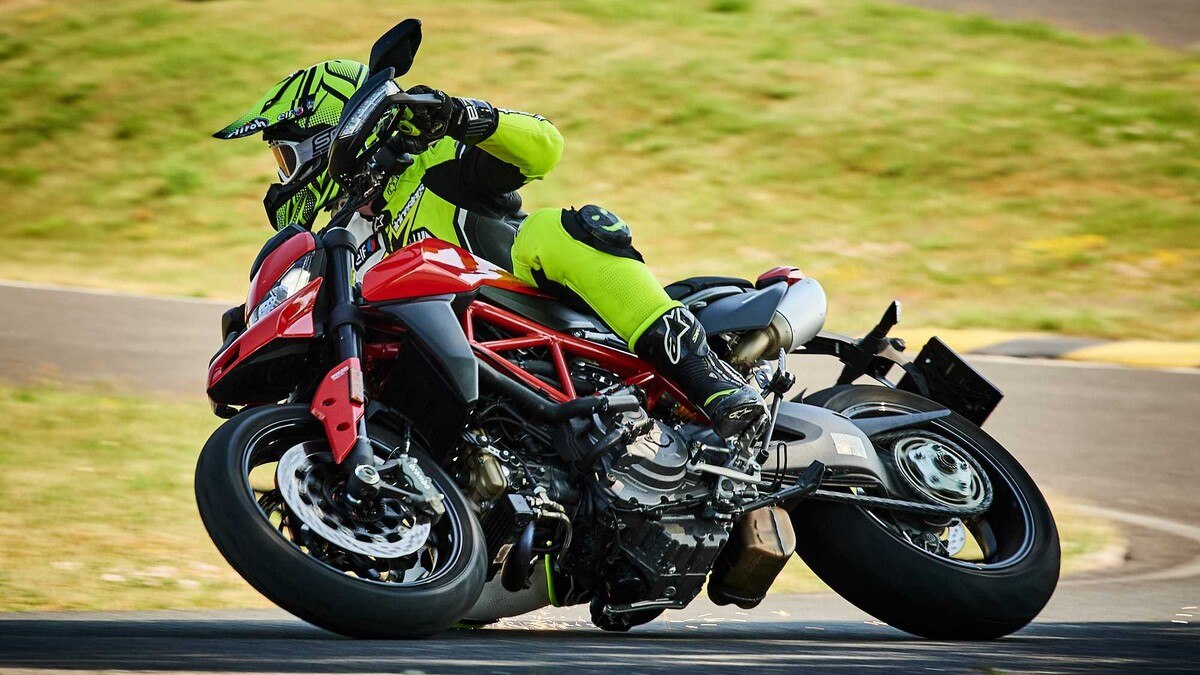
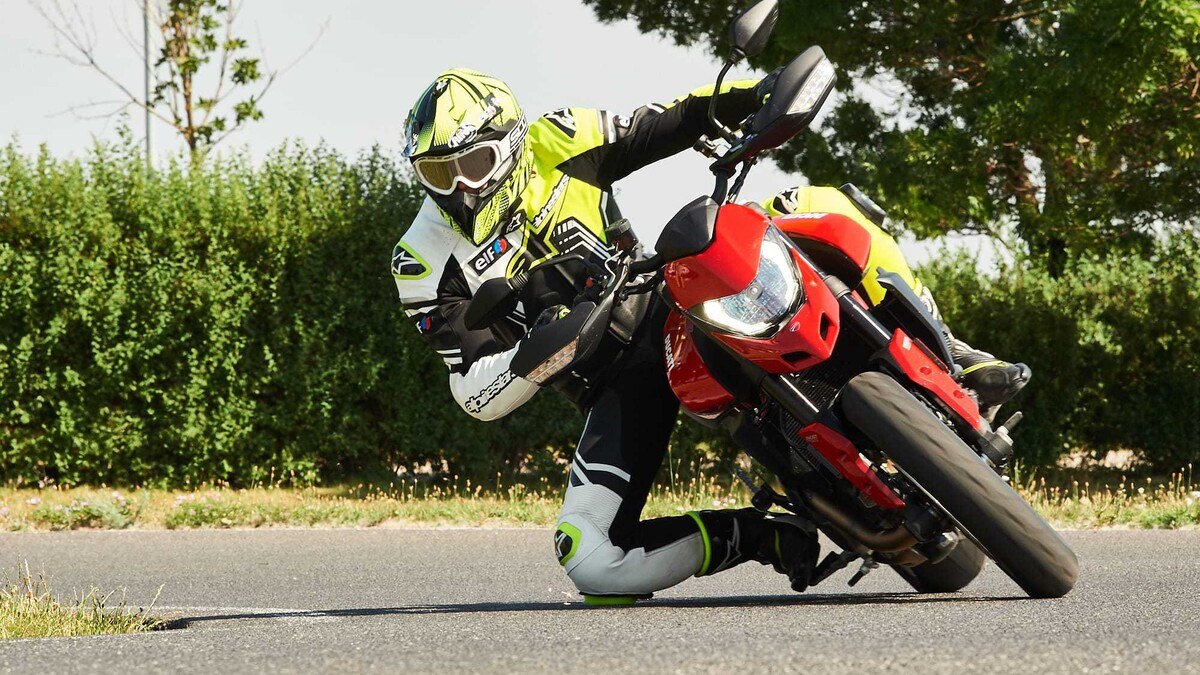
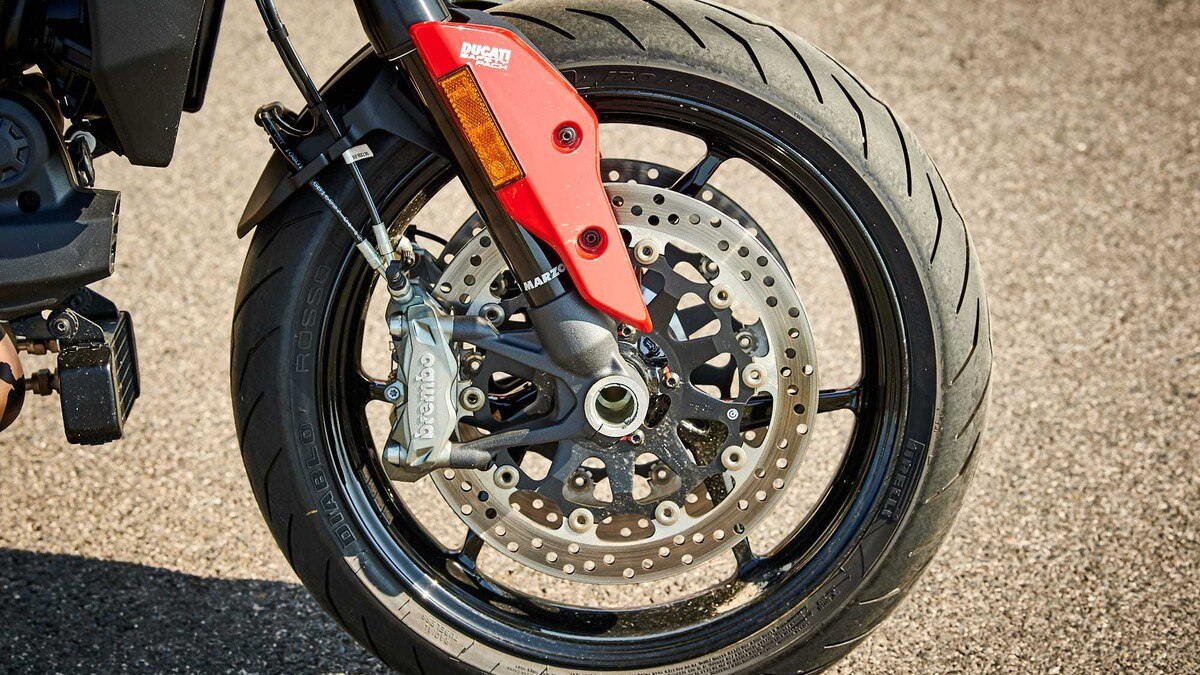
The new Hypermotard 950 is also available as an elegant SP variant with lighter forged wheels, a few carbon parts and Öhlins chassis at the front and rear. The normal Hyper is sufficient on the chassis side for very sporty country road drivers and for hobby track use. Because: The 45 millimeter Marzocchi fork is fully adjustable and offers really decent basic performance. Thanks to 170 millimeters of suspension travel, the Hyper 950 also rolls smoothly over second-class roads. If the pilot anchors hard, the fork dips naturally - but not as smoothly as butter. After the first nod, the hydraulic damping soon comes and provides confidence-inspiring support. When driving at a sporty pace, the fork doesn't tend to rock and still responds cleanly. At the rear, a simple Sachs shock absorber without a compensating tank is used, with adjustable preload and rebound. Suspension travel: 150 millimeters. An upgrade could be worthwhile here, as the shock absorber does not offer the high precision of the fork and tends to swing slightly earlier when riding hard. Whereby: You are already driving in full fire mode. Or to put it another way: The Öhlins chassis is not necessary for road riders and racers will probably not primarily use the Hyper 950 as a ring device. However, the Swedish chassis gold is a winner for the eye and the image. In a direct comparison to the original model, the Hypermotard 1100 S, it is immediately noticeable that the new Hyper is significantly more stable and turns in much more neutrally. And in direct comparison to the Hypermotard 821 / 939, I think the bike has become bolder and more agile. Tip: Buy a standard Hyper 950 and replace the shock absorber after the break-in period. Maybe have a fork service done with individual adjustments after a few years - done. The Hypermotard 950 has an agile yet stable chassis, with surprisingly sporty reserves. The SP variant is two centimeters higher and therefore offers more freedom in lean angles. During the test, the standard Hyper's footrests touched down late enough. Personally, I wouldn't have needed more lean angle freedom - despite extremely hot conditions (34 degrees Celsius).
Brakes
Traditionally, Ducati uses brake components from Brembo. The Hyper shows why: discs, pads, brake calipers, brake pumps - everything from the Italian brake specialist. It is therefore hardly surprising that the braking system appears to be made of one piece and is very well coordinated. The highlight: Ducati uses the latest Bosch corner ABS. This means you can brake deep into a curve with a clear conscience and the ABS is still ready to intervene thanks to lean angle detection. The ABS can also be adjusted in several stages. In ABS 1 mode, the sportiest setting, the rear wheel is allowed to leave the ground and can be blocked. This is intended to make braking maneuvers successful. Since the asphalt at the test site is... ÖAMTC driving technology in Teesdorf But it's so easy to grip that I didn't even try it. Especially since I can hardly do it either. Back to the brakes: The two monoblock calipers at the front bite into the two 320 millimeter brake discs in a very sporty manner with precise feedback - actuated by a semi-radial brake pump with an 18 millimeter piston diameter. This works really well, especially since you can only feel the ABS intervention subtly but noticeably in the lever. Really fine goods for aggressive late brakers. One finger is easily enough to place the Hyper on the front wheel. A 245 millimeter single disc is used at the rear, which decelerates surprisingly well - even when the bike gets really hot - an old Ducati problem in some models.
Noticed
How good the Hyper 950 sounds from the two series mufflers despite the Euro 4 emissions standard. Hats off. That despite the 870 millimeter seat height you don't have the feeling of sitting on a high horse. How easy the Hyper is to drive and how easy it is to drive fast. The fully adjustable fork is already in the entry-level version. The perfect quickshifter. The extensive electronics package - also from the standard Hyper. The extended service intervals.
Failed
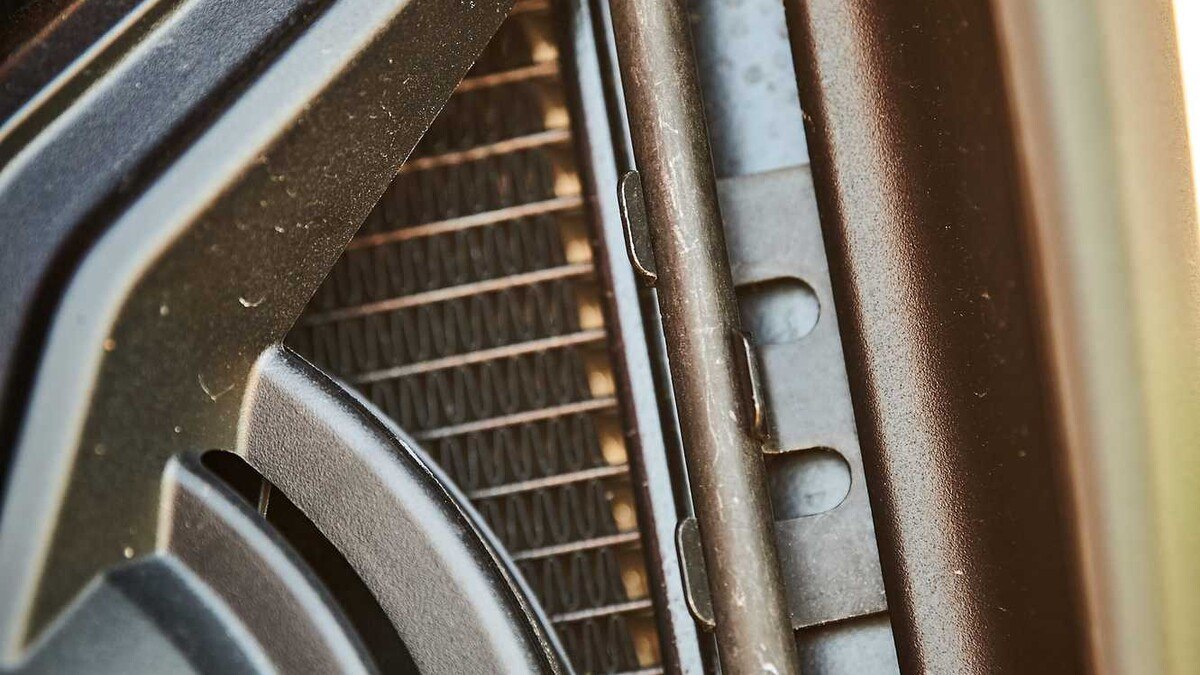
The much too delicate hand protectors. The bench that becomes painful in the long run. The rearview mirrors. That you need a Torx to remove the seat (which, by the way, is hidden on the right behind the radiator cowl).
Test result Ducati Hypermotard 950, by p.bednar
More information about Ducati Hypermotard 950
With kind support from TOTAL Austria
More action photos from the test drives can be found on Instagram: apex_moto_at
Or follow us on Facebook: Apex Moto