

 Suche
Suche
 Mein Konto
E-fuels are unstoppable”
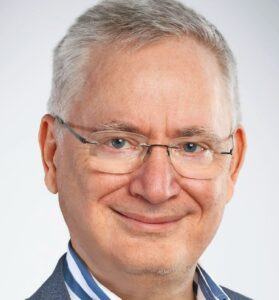
In an interview, Stephan Schwarzer, Managing Director of the eFuel Alliance Austria, emphasizes the important role of synthetic fuels in the decarbonization of transport.

E-fuels are unstoppable”
AUTOMOBILE INDUSTRY: According to a study by the Fraunhofer Institute, the large-scale use of e-fuels in cars and trucks is not economically viable. What makes you confident that synthetic fuels, which have to be produced using a lot of energy from hydrogen and CO2, will still play a role in the future?
STEPHAN SCHWARZER:Currently only around four percent of the entire Austrian car fleet is electrified, which means 96 percent still run on diesel or gasoline. Despite the current increase in new registrations of electric cars, the transformation is proceeding far too slowly to achieve the climate neutrality announced by the government in 2040. Synthetic fuels produced in a climate-neutral manner could make a decisive contribution to this, as they work in conventional combustion vehicles without expensive conversions. If I add five percent e-fuels to the gas at the gas station, I have five times as much leverage as if I sold one percentage point more electric cars.
E-fuel skeptics point out that the complex production of synthetic fuels will increase the price per liter at the gas station to up to three euros.
The actual price per liter will depend on the scaling of e-fuel production, which of course becomes cheaper the more is produced. In fact, there is a risk of fines if the EU climate targets are not met, which will probably make conventional fuel much more expensive, so that prices will probably level out at a higher level overall in the future. However, I am not assuming three, but rather less than two euros per liter.
The production of e-fuels must meet strict ecological criteria. Only “green” electricity may be used, but there is not enough available in Europe. Where should the e-fuels be produced?
The Fraunhofer Institute has listed around 100 countries worldwide that are suitable for e-fuel production. There is an abundance of sun, wind and hydropower that could be used to produce electricity. Porsche has already built a pilot plant in southern Chile that shows that the principle works. The existing infrastructure of tankers can be used for transport to Europe. Compared to the few countries from which we source our oil, e-fuel production offers significantly greater growth prospects and our dependence on oil imports is reduced.
What regulatory requirements would you like to see in order for e-fuel production to gain momentum?
In fact, three screws have to be turned to do this. Firstly, a mandatory quota of 30 percent for climate-neutral fuels in all transport should be set, secondly, the combustion ban should be corrected so that non-fossil fuels are rewarded for achieving the target, and thirdly, the currently exuberantly formulated criteria for green hydrogen should be concentrated on the essentials so that they can be implemented on a large industrial scale. If Europe implements these three points, it could become a pioneer of climate-neutral mobility.
Event tip
The e-fuel congress “ekkon” will take place in Vienna in the Julius Raab Hall of the WKÖ from September 25th to 26th, 2025. Around 300 experts from politics, business and science will discuss the importance of eFuels as a cornerstone of the energy transition. The focus is on topics such as technological openness, international projects, geopolitical challenges and specific areas of application. Further information: www.ekkon.at