

 Suche
Suche
 Mein Konto
Everything new at Renault
Groupe Renault is completely restructuring under new CEO Luca de Meo. And: A cult car is celebrating its comeback.

Everything new at Renault

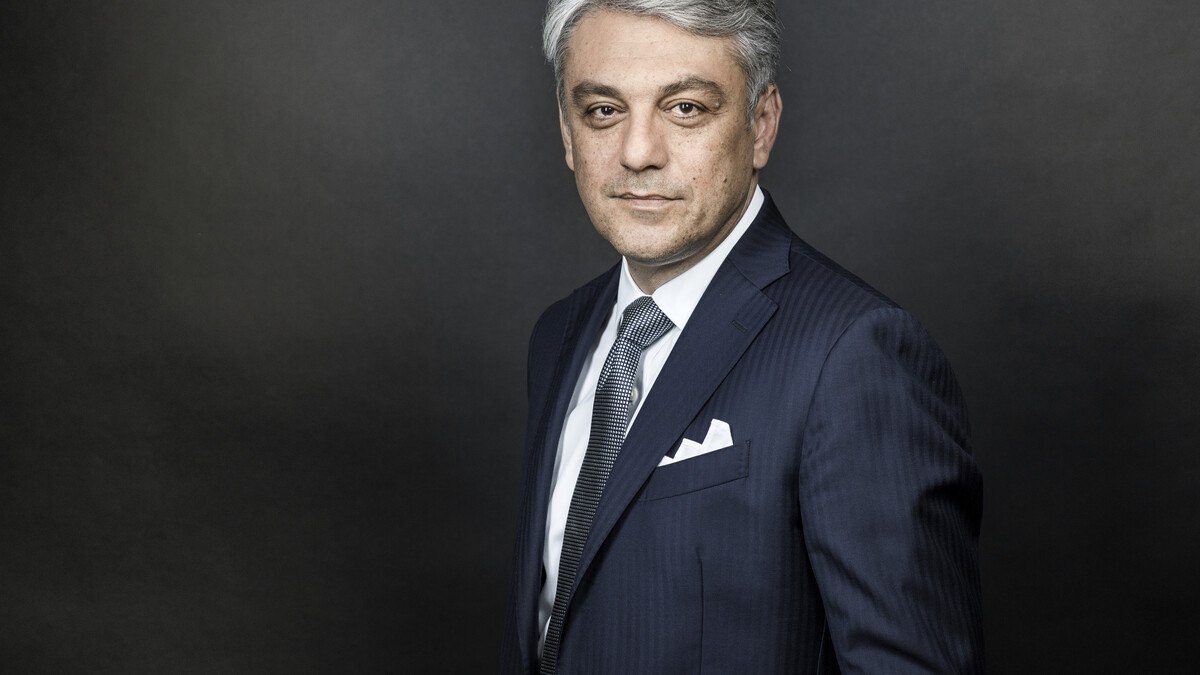
Luca de Meo, CEO of Groupe Renault, has big plans. With the “Ranaulution” strategic plan, he is completely transforming the French manufacturer. The former Seat CEO wants to proceed in three phases:
- Erholung – bis 2023 liegt der Fokus auf der Verbesserung der Margen und der Cash-Generierung
- Erneuerung – bis 2025 sollen neue Fahrzeugsegmente erschlossen werden. Das Ziel: die Rentabilität steigern
- Revolution – ab 2025 soll sich das Geschmäftsmodell vermehrt auf Technologie, Energie und Mobilität ausrichten. Ziel: Die Renault Gruppe zu einem Verreiter in der neuen Mobilität mache
Luca de Meo explains the project like this: “Renaulution is aboutto shift the entire company from volume to value. It's more than a turnaround, it's a profound oneTransforming our business model. We have created a stable, healthy foundation for our performance. We streamlined our processes, starting with development, resized where necessary, and directed our resources toward high-potential products and technologies. This increased efficiency will fuel our future product range: technology-driven, electrified and competitive. And this will strengthen our brands, each with its own clear, differentiated territory; responsible for their profitability and customer satisfaction.We will evolve from a car company that works with technology to a tech company that works with cars and generates at least 20 percent of its revenue from services, data and energy trading by 2030.“
The new direction also has an ecological goal in mind: by 2050, CO2-The Renault Group's footprint in Europe will fall to zero.
Financial goals
An operational one is expected by 2023Group margin of more than 3 percentcan be achieved and a cumulative operating free cash flow in the automotive sector of around 3 billion euros (2021-23). Investments (research and development) are expected to fall to around 8 percent of sales. Until2025should be an operational oneGroup marginfromat least 5 percentcan be achieved, a cumulative operating free cash flow in the automotive sector of around 6 billion euros (2021-25) and an improvement in return on capital employed (ROCE) of at least 15 points compared to 2019.
4 business units
The strategic plan is based on two pillars: Firstly, the improved efficiency of the functions responsible for competitiveness, costs, development time and time-to-market. On the other hand, the creation of four business units with strong identities and positioning: Renault, Dacia-Lada, Alpine and Mobilize.
The improved efficiency of the functions covers three main areas:
- Entwicklung und Fertigung: Reduzierung der Zahl der Fahrzeugplattformen und der Antriebsstränge; alle Modelle, die auf den bestehenden Plattformen eingeführt werden, werden in weniger als 3 Jahren auf dem Markt sein. Anpassung des Produktionsvolumens von 4 Millionen Einheiten im Jahr 2019 auf 3,1 Mio. Einheiten im Jahr 2025 (Harbour-Standard); erhöhte Effizienz mit Lieferanten
- Lenkung der internationalen Präsenz in Richtung margenstarkes Geschäft
- Strikte Kostendisziplin: Senkung der Fixkosten und der variablen Kosten sowie der Investitionsausgaben
These measures are intended to strengthen the group's competitiveness and theReduce break-even by 30 percent by 2023. The creation of four divisions (Renault, Dacia-Lada, Alpine and Mobilize) with strong identities and positioning aims to create the basis for a rebalanced and more profitable product portfolio. The plan is for 24 new launches by 2025 – half of them in C/D segments – and at least 10 fully electric vehicles. The new value-oriented organization wants to lead to a better price and product mix in conjunction with the product offensive.
The Renault strategy
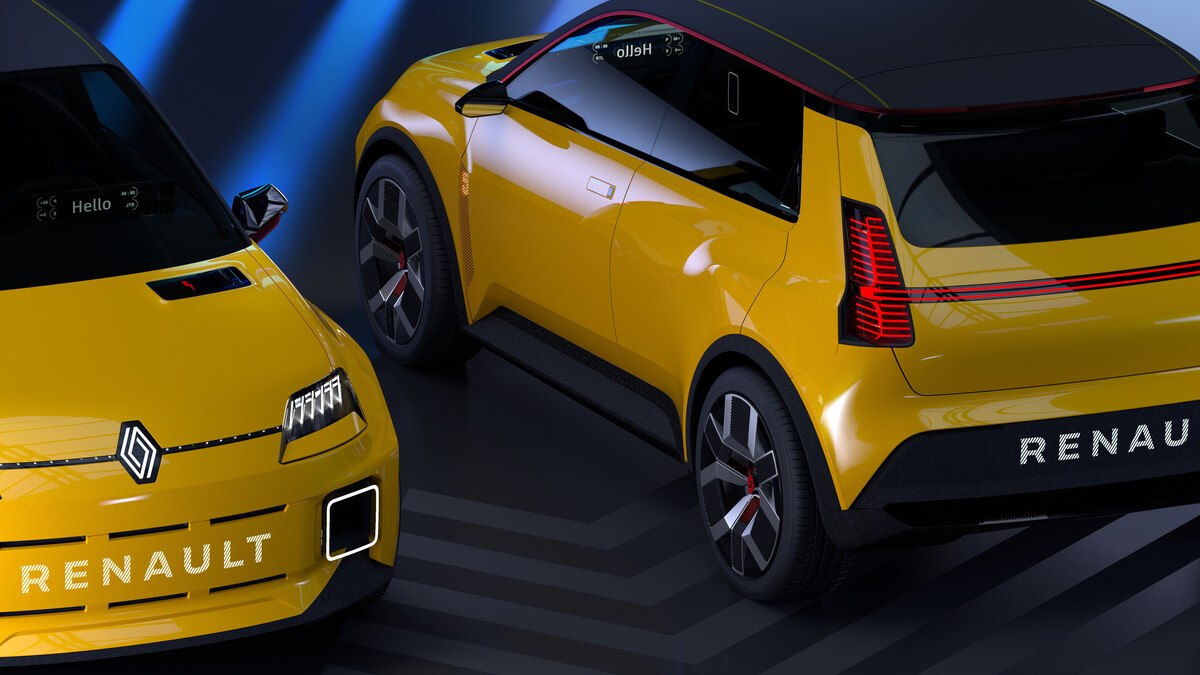
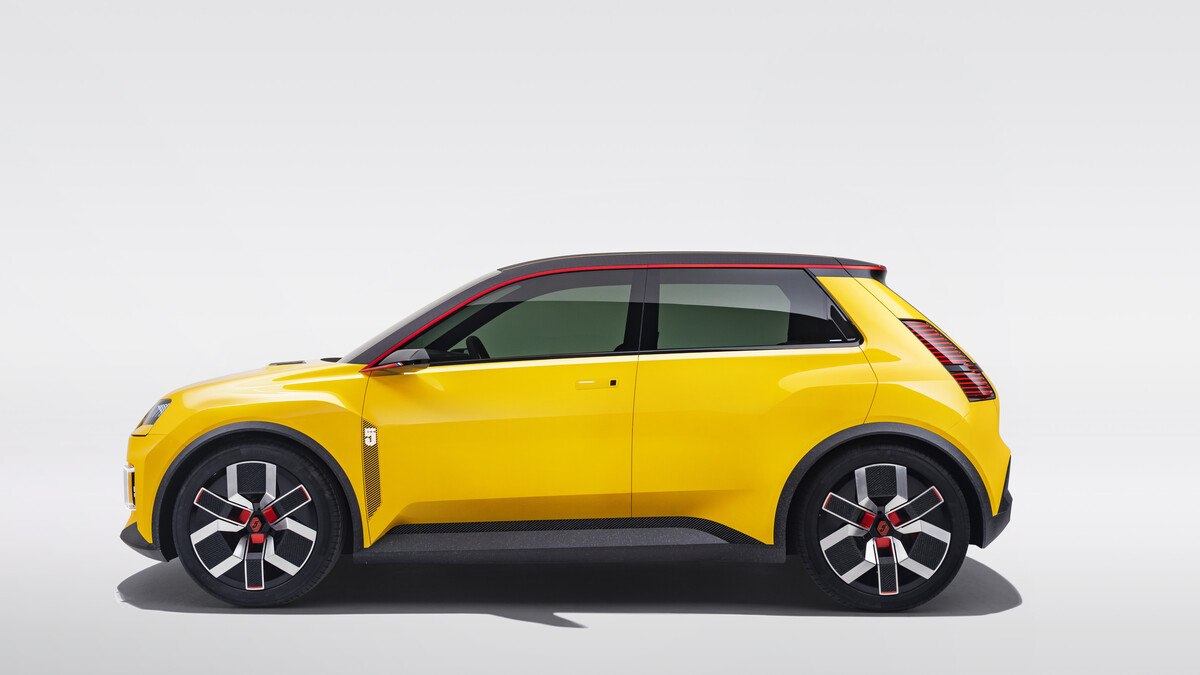
With a product offensive, Renault wants to offer the greenest drive mix of all manufacturers in Europe by 2025. Electric and hydrogen solutions in particular should lead to this,14 new models are introduced, seven of which are fully electric. All new products will have an electric and hybrid version. The prototype study of the new oneRenault 5is intended to give an outlook on how Renault imagines the future. In the technology sector, Renault will in future rely on the so-called “Software République” – an open, cooperative ecosystem that deals with software, data, cybersecurity and microelectronics. This is intended to expand Renault’s range of connected services.
The Dacia-Lada strategy
Dacia and Lada will increasingly use the alliance's new, highly flexible CMF-B platform in the future and increase the number ofReduce vehicle platforms from four to one and the number of body types from 18 to eleven. TheAverage production increases from 0.3 million units/platform to 1.1 million units/platform. Dacia will remain Dacia, but should be more cool. In its strategic direction until 2025, the brand continues to rely on a clear, cost-disciplined “design-to-cost” approach to product development. This should allow for a competitive product range that will be relaunched in Europe in 2021 with the new Sandero and the Dacia Spring. Three more new Dacia models are expected to be added by 2025. In total, the Dacia-Lada business unit plans to introduce seven new models by 2025, two of which will be in the C segment. In the area of alternative drives, both brands should be able to use group technologies; LPG is intended for Dacia and Lada models, and E-Tech technology for Dacia models.
The Alpine strategy
In the future, the Alpine Cars, Renault Sport Cars and Renault Sport Racing divisions will join forces under the umbrella of the new Alpine business unit. In addition to the focus on Formula 1 and motorsportAlpinenewDevelop powerful, innovative and purely electric sports cars. The new Alpine business unit will draw on the complete technical know-how of the Renault Group and the Renault-Nissan-Mitsubishi alliance. InCooperation with LotusA purely electric successor to the Alpine A110 is to be developed.Alpine's goal is to be profitable in 2025, including investments in motorsports.
The Mobilize strategy
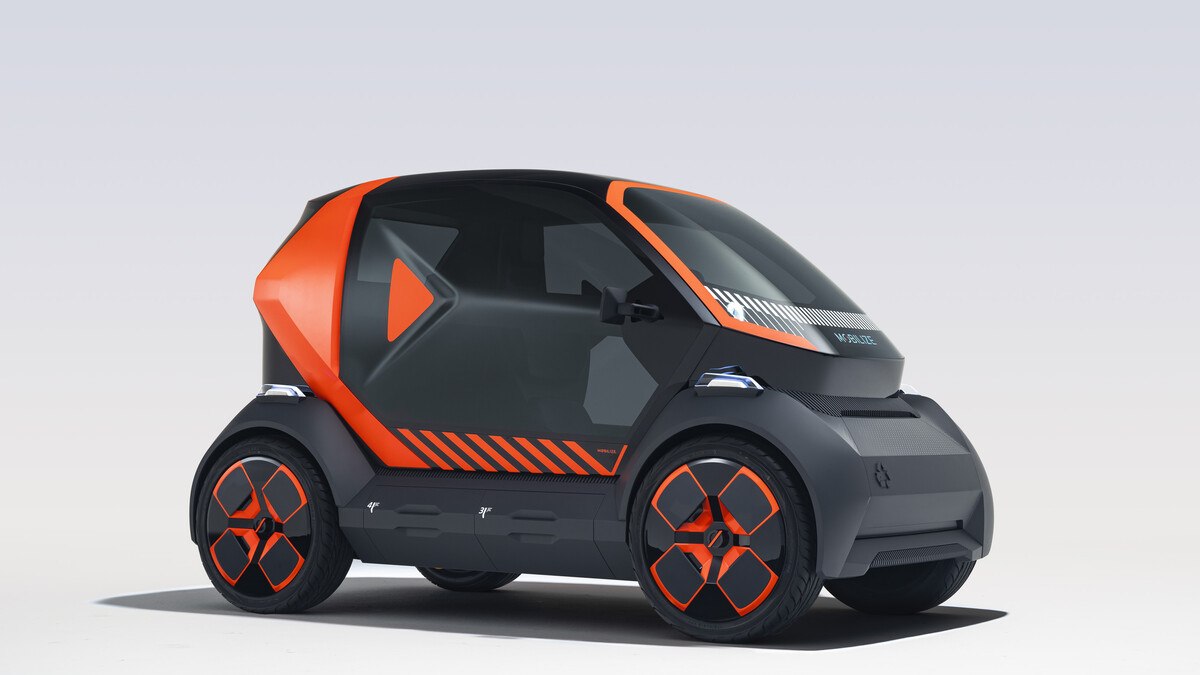
The new business areais intended to develop new business areas from data, mobility and energy servicesgenerate more than 20 percent of group sales by 2030. The new brand brings together all of the Renault Group's activities in the areas of mobility, energy and data-based solutions. Mobilize uses, among other things, the expertise of RCI Bank & Services. Beyond automobiles, Mobilize will offer a wide range of innovative services in the areas of mobility, energy and data. The new entity will have its own engineering, quality and design team as well as its own service offering in energy, connectivity and mobility. As part of the Renaultion strategy, a shared mobility prototype, the Mobilize EZ-1, was also presented, reminiscent of the Renault Twizy.