

 Suche
Suche
 Mein Konto
Training on the kart track – learning to drift on a motorcycle
Learn to ride a motorcycle with 125cc children's motocross bikes in a go-kart hall? Sounds crazy, right? I thought so too, until I sat on it myself and had one of my best two-wheeled experiences ever. Or: How to learn to drift on a motorcycle safely and easily.

Training on the kart track – learning to drift on a motorcycle
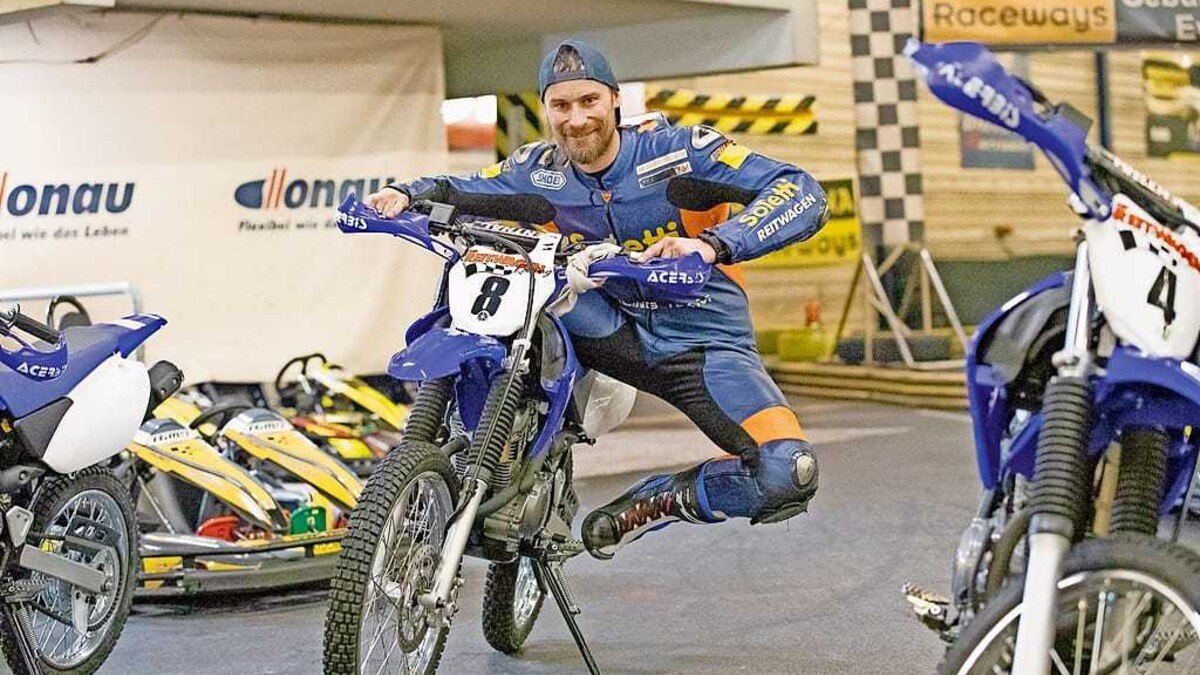
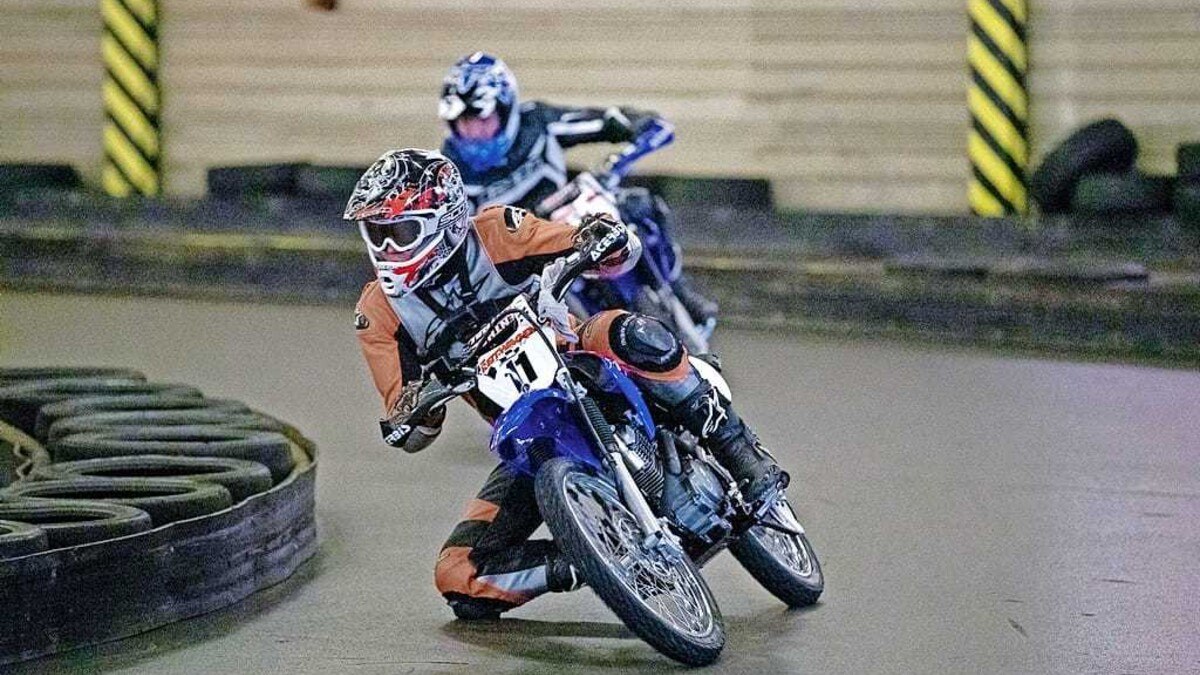
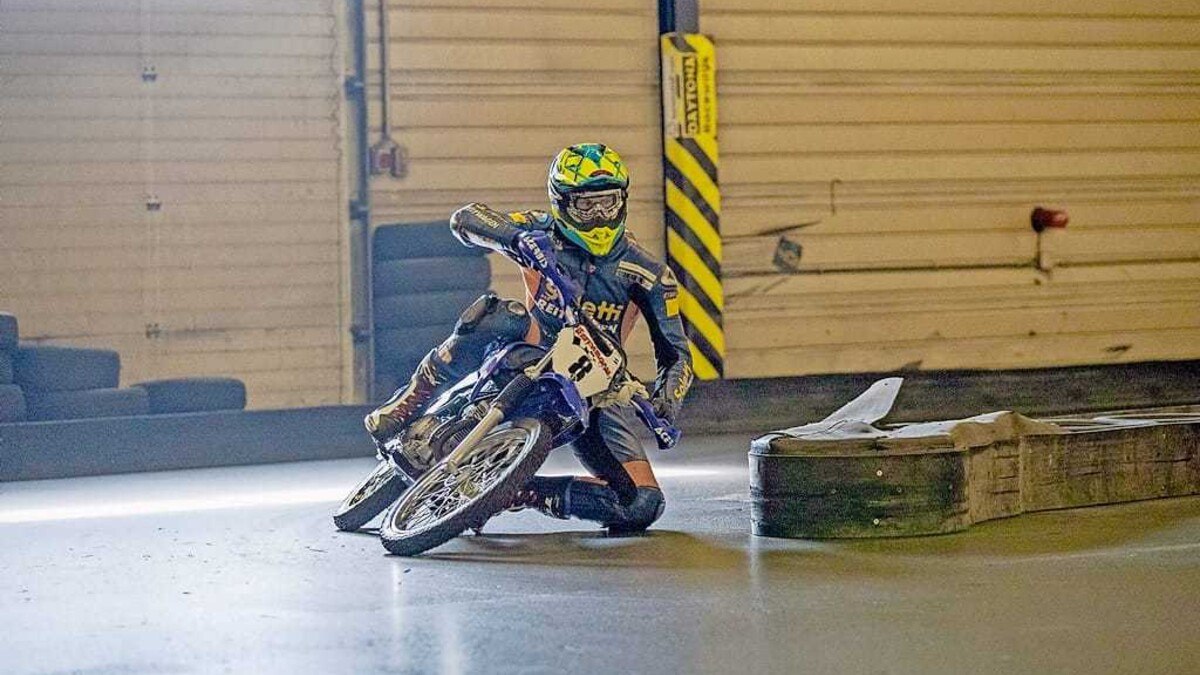
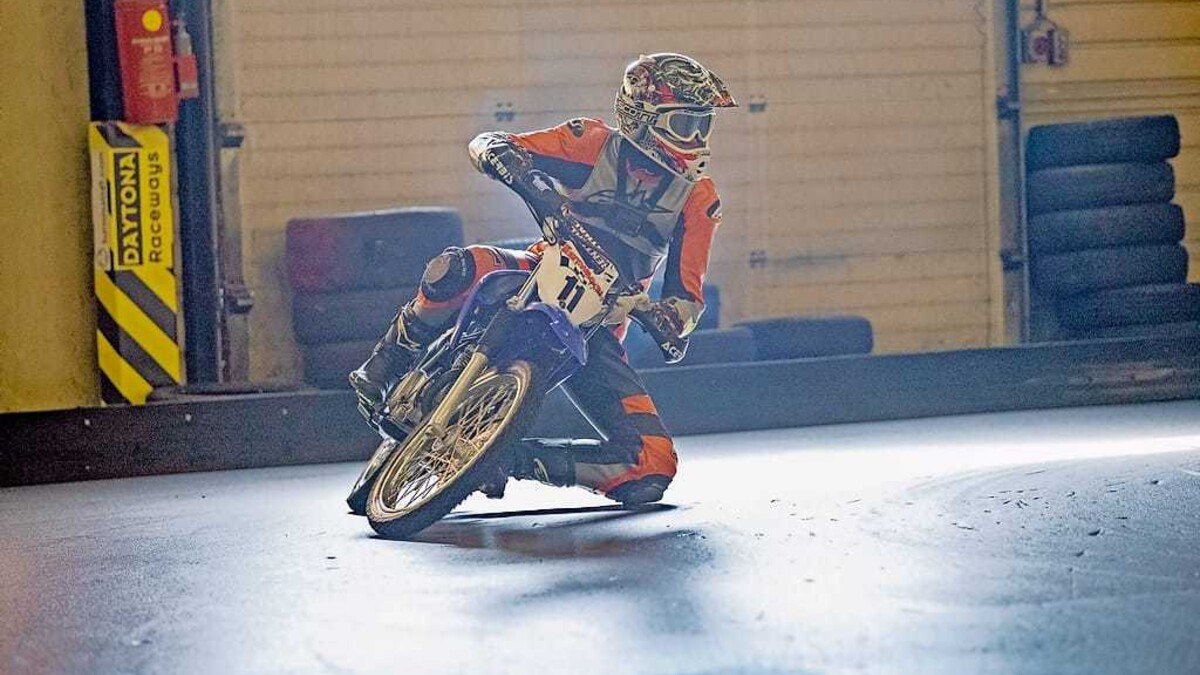
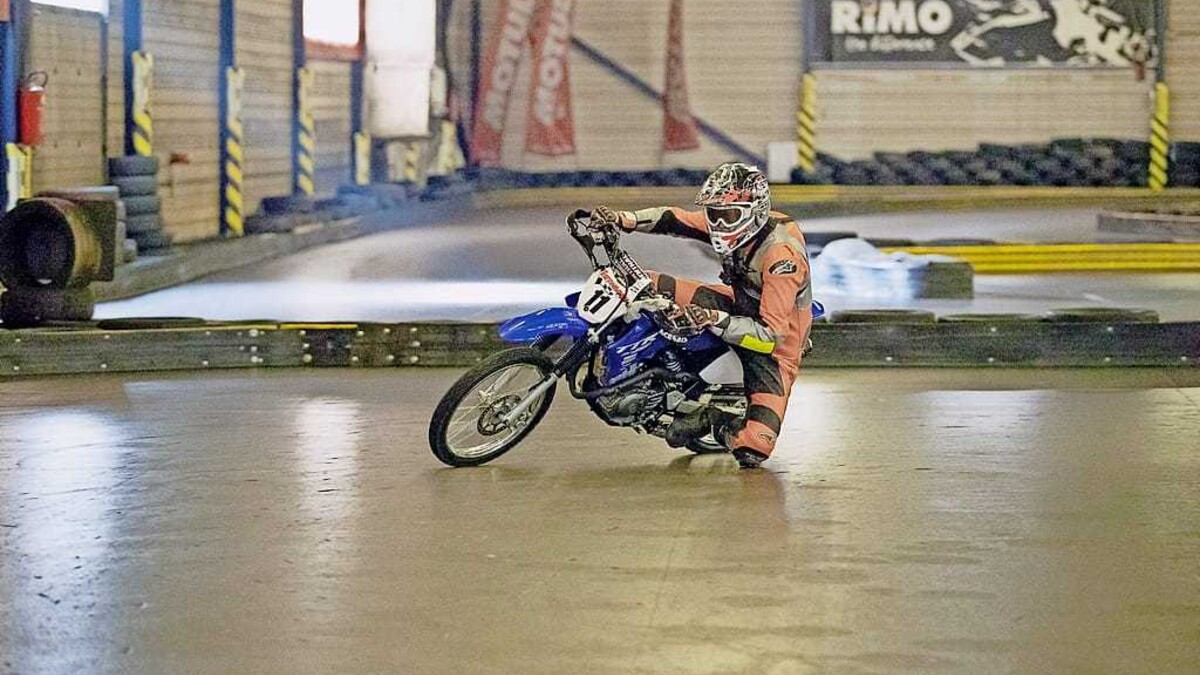
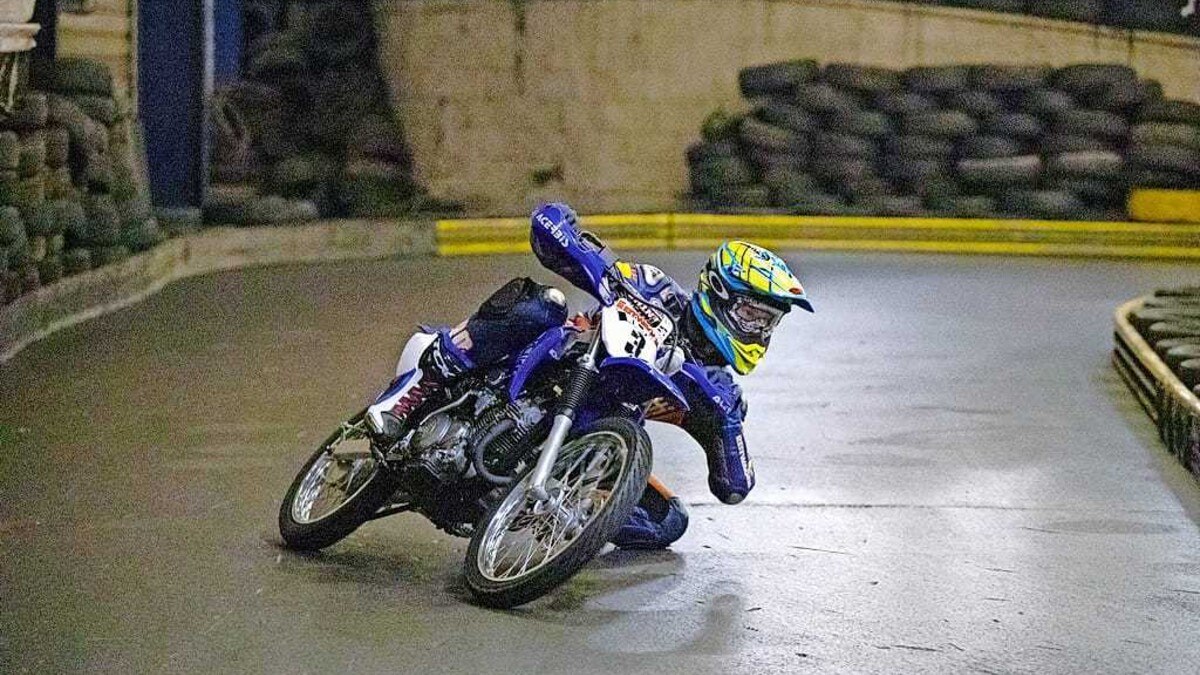

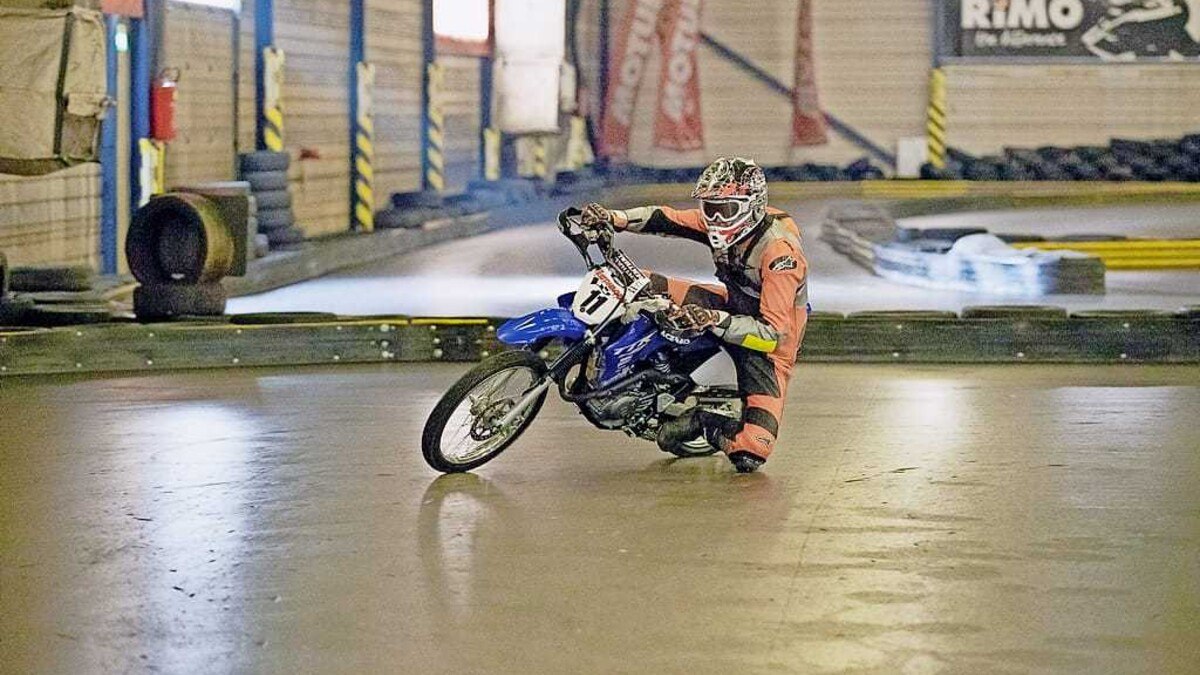
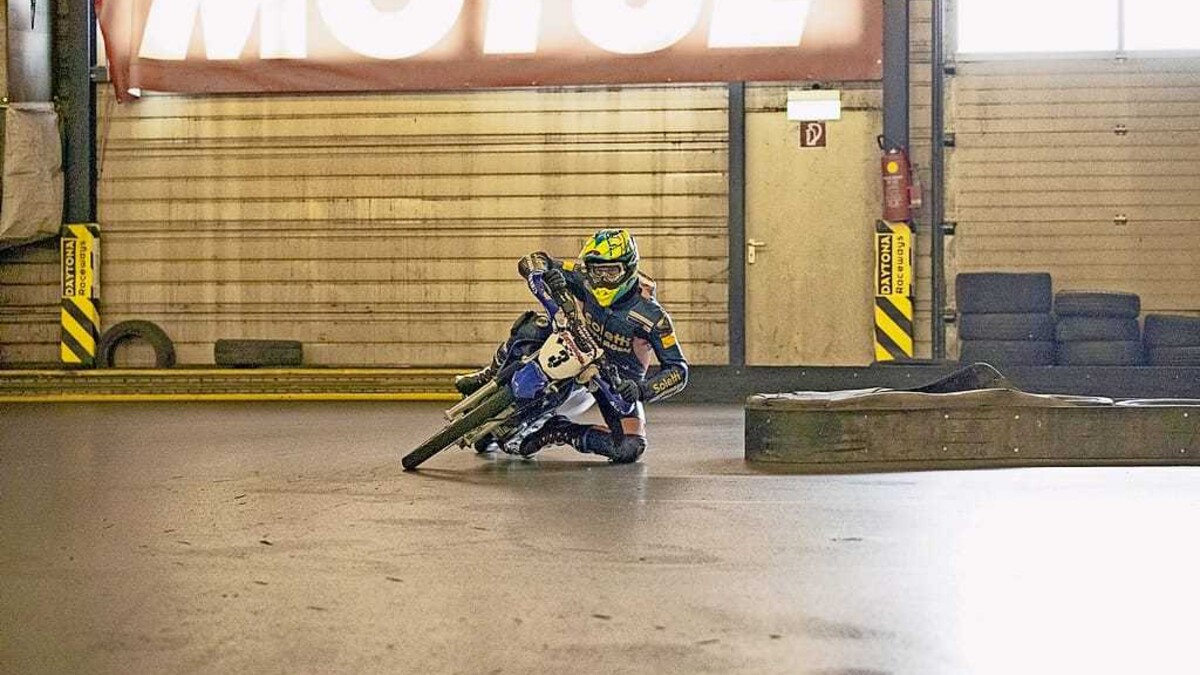
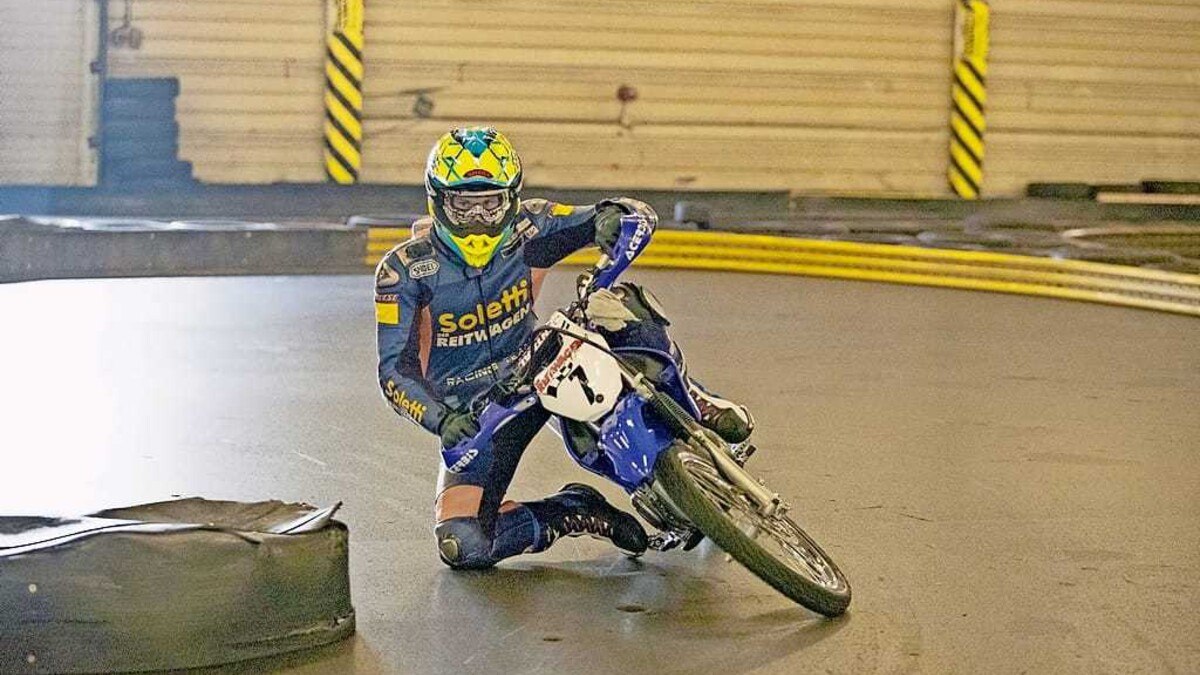
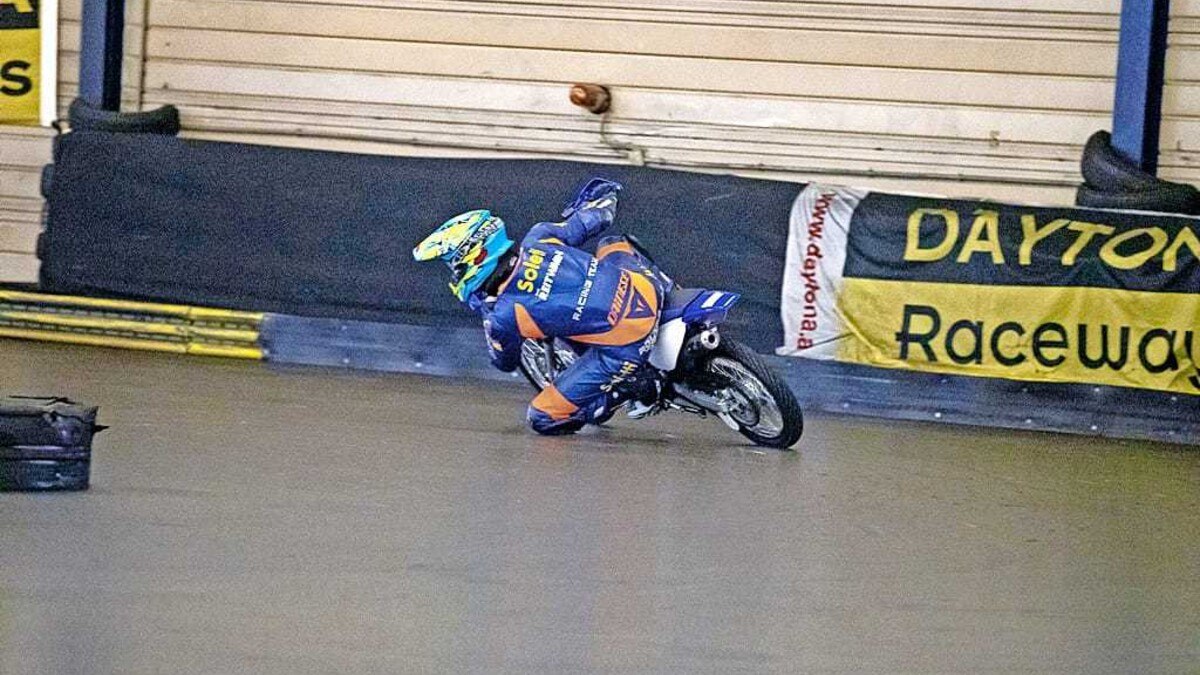
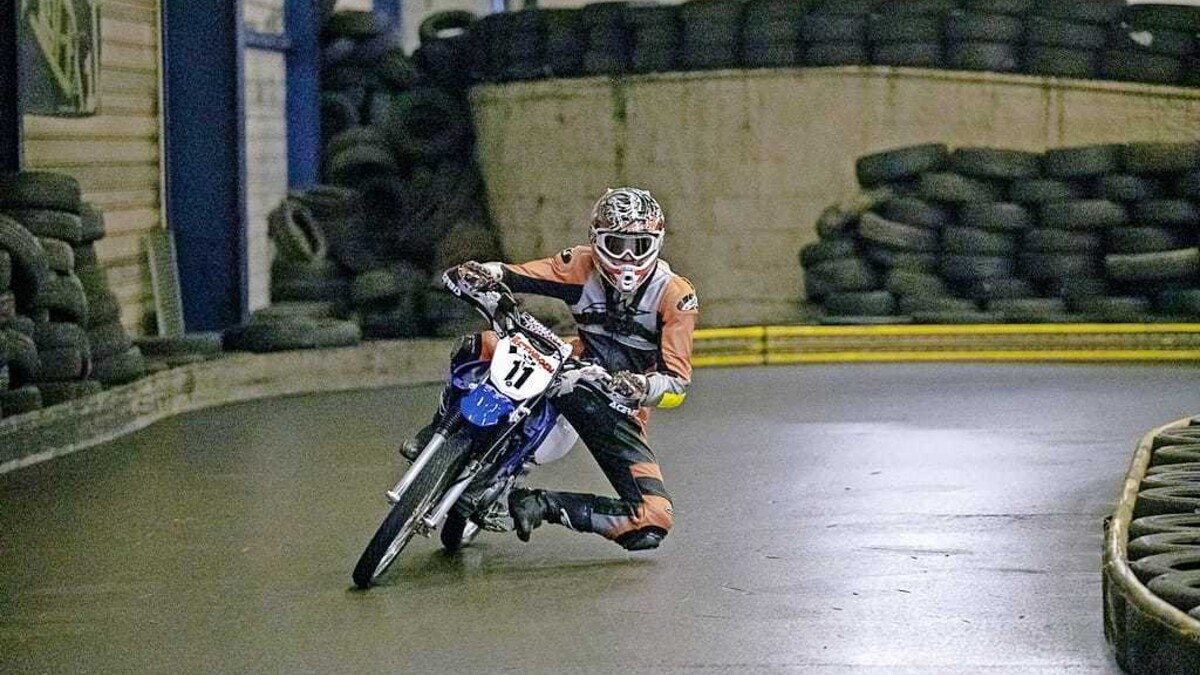
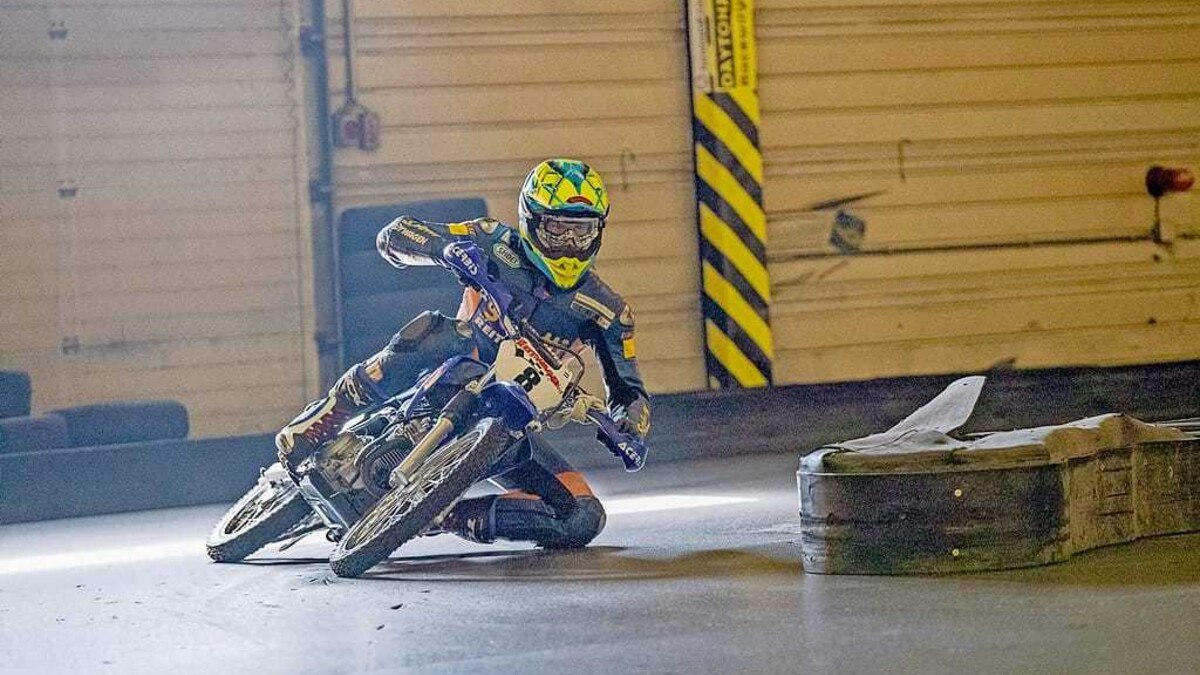


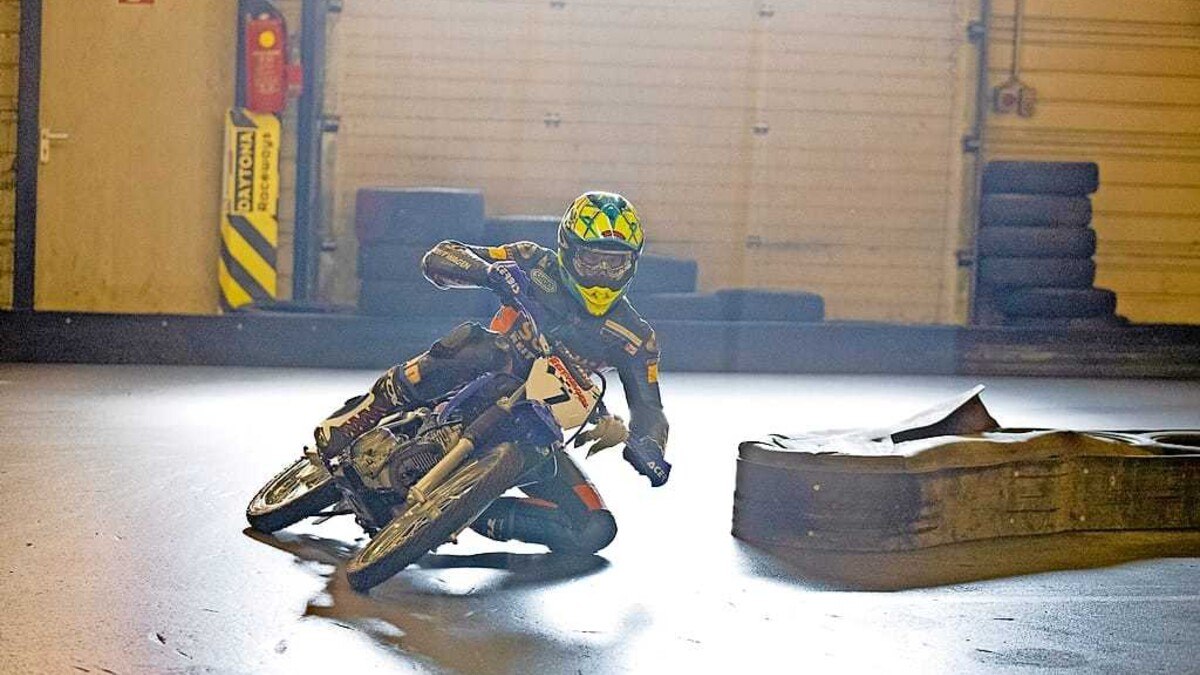
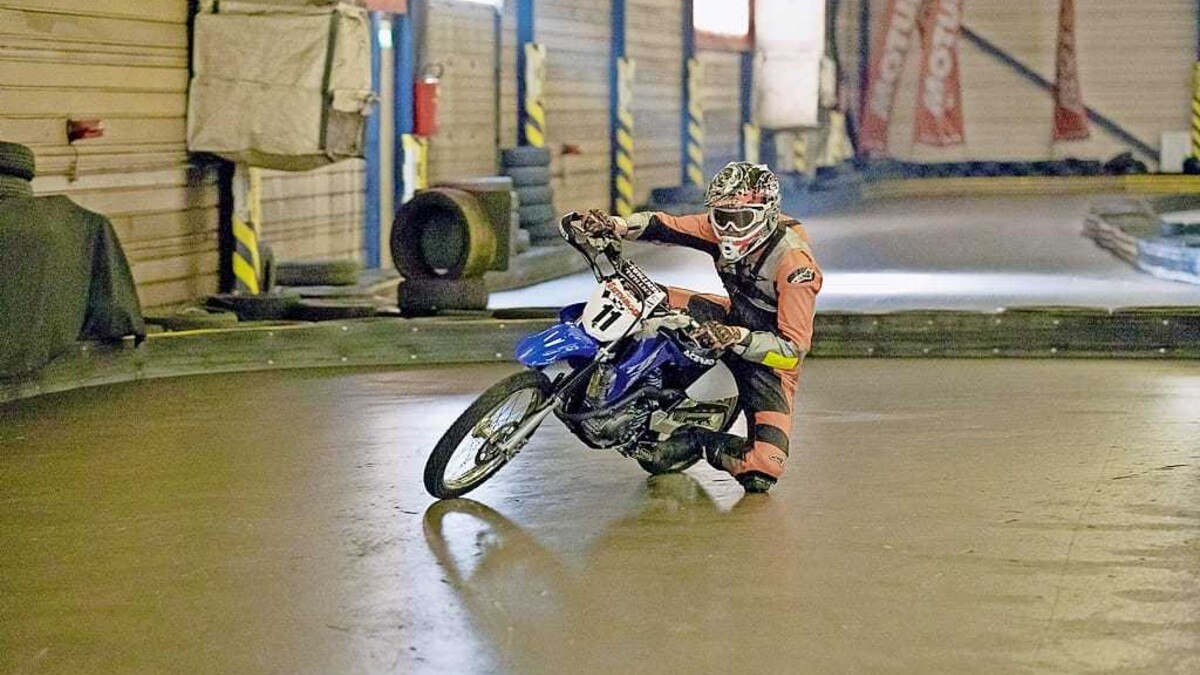
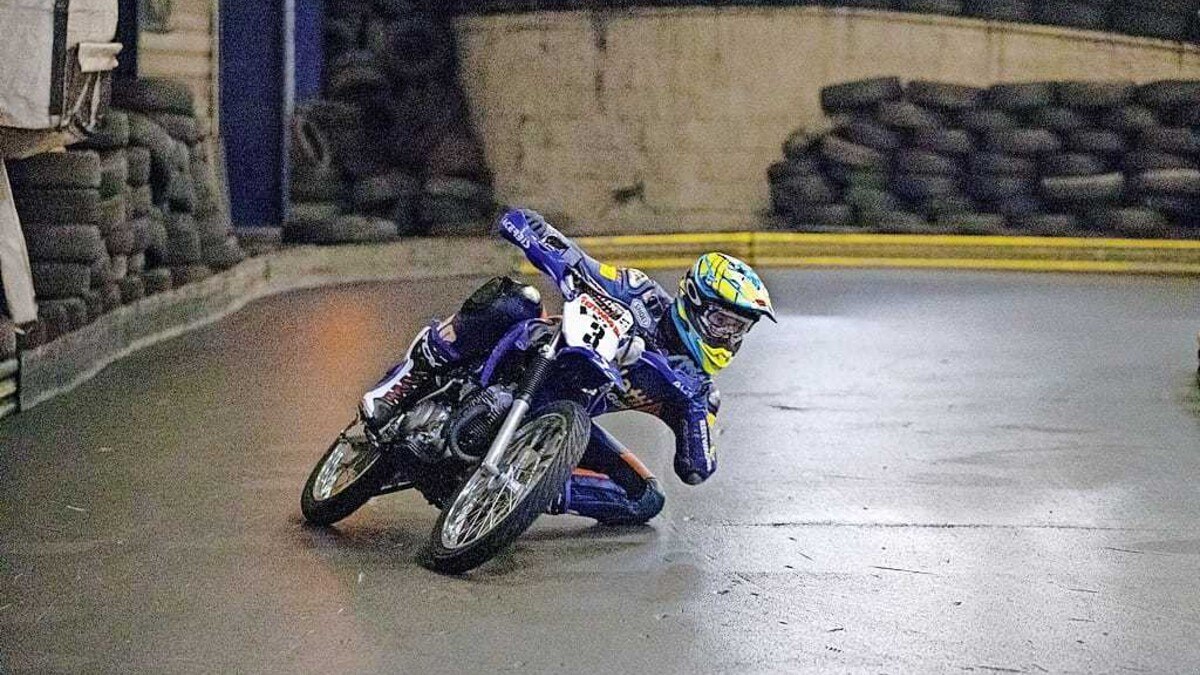
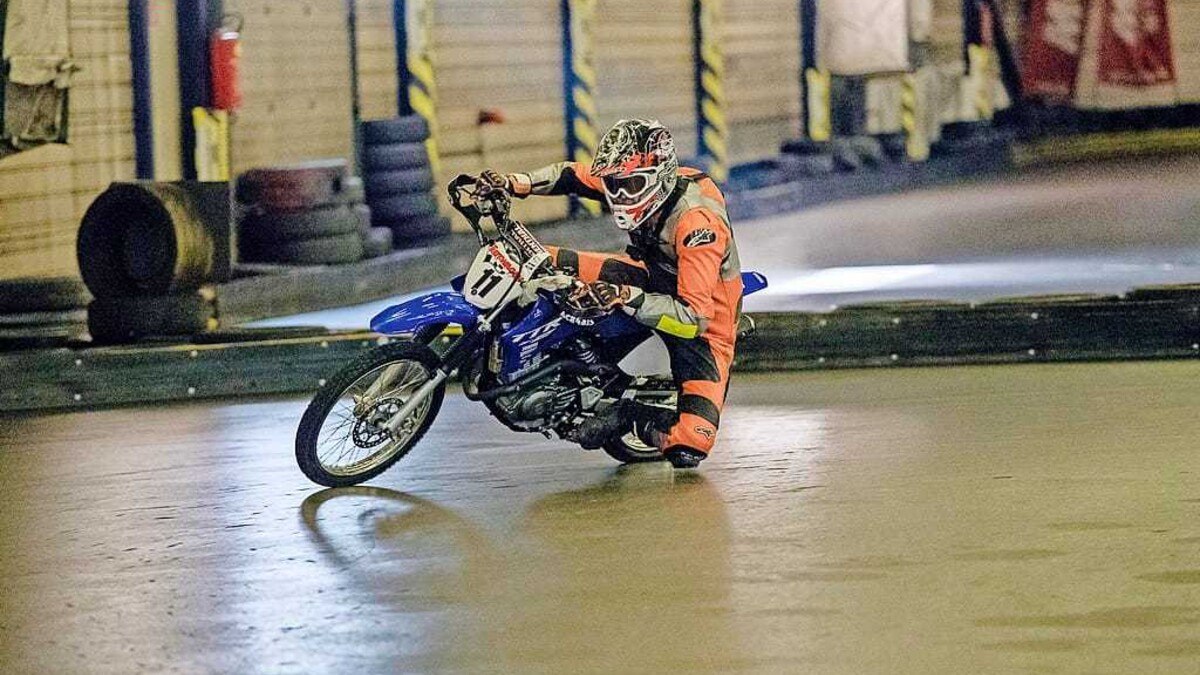
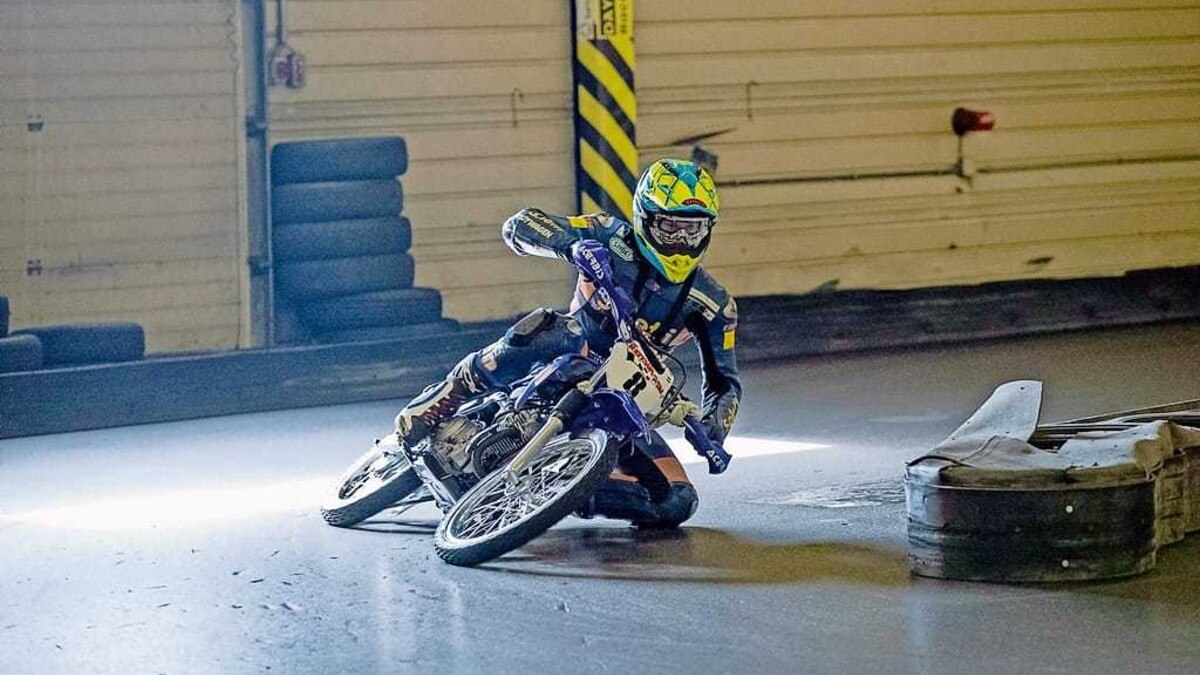
I admit, I did the night before Indoor training slept badly. I was nervous and excited. It all started off easy: Yamaha Motor Austria and the local ex-racing driver Roland Resch have joined forces and invited journalists to a squeaky rendezvous. The highlight: Roland's indoor training courses have been around for a long time, but since this year the students have been riding on blue Yamaha children's motorcross bikes instead of yellow Suzuki irons. What remains are the special Heidenau tires and the Daytona Karthalle in Langenzersdorf with its slippery surface. Sporty motorcyclists know the training, it has a reputation for learning how to slide in a controlled manner over both wheels (=drifting). Personally, I can handle a slightly slipping rear wheel quite well, but a slipping front wheel causes me anxiety and panic. That explains my short, sweaty night before training. One thing first: the nervousness was completely unfounded.
No effort, endless fun
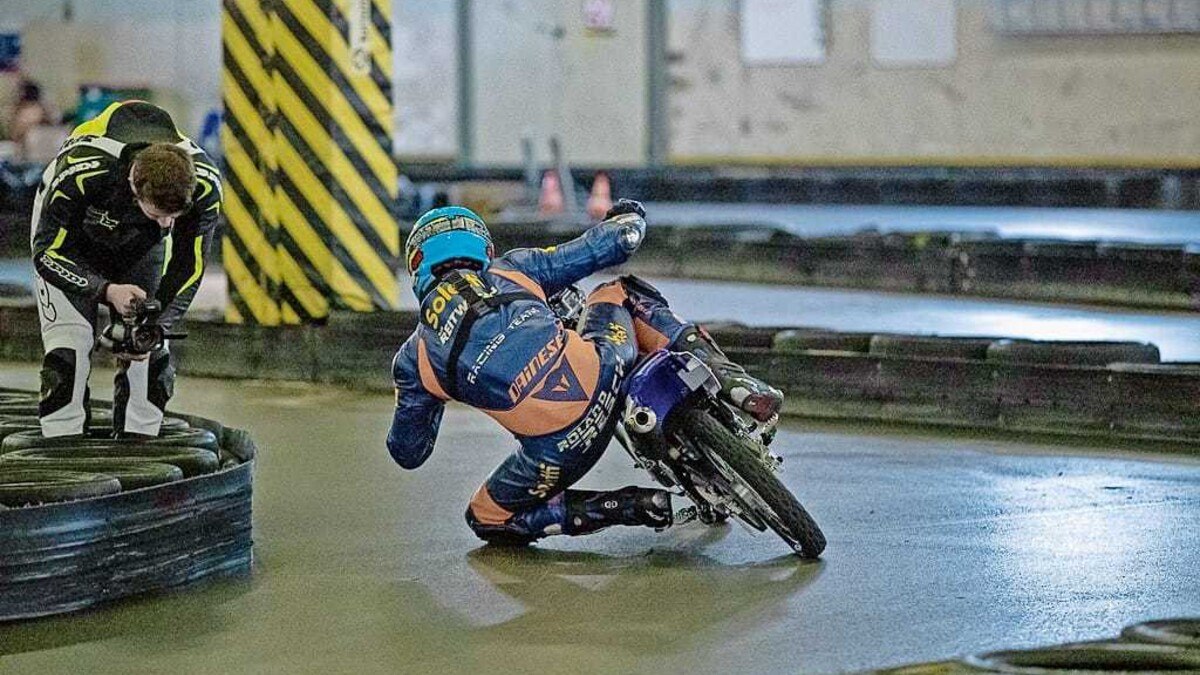
The Yamaha TT-R 125 It produces just 10 hp and is neither particularly high nor heavy - just a children's motorcycle. But at least it is equipped with an electric starter, smart brakes and ergonomics that are still drivable even for two-meter tires. Roland explains the most important factors for learning something and having fun: "Boys, movement is everything. We do an extreme hang-off to have a kind of training wheel with the knee on the ground - for better balance." This means: The hips have to be mobile, the butt is mostly next to the seat, and you sit more on your thighs. The upper body bends down towards the handlebars, the shoulders remain parallel to the handlebars. This results in a neat bend in the hip - Roland calls it Racing-V. The elbows are flared out – similar to motorcross riding. This makes you more active while driving and allows you to react more quickly on the handlebars. "Tip: Please drive in the middle of the track. This is about driving dynamics and not about the fastest lap time. If you get too close to the barrier, you can use your knee to merge. And that really hurts," says Roland.
Across, across, across
The first few laps take some getting used to. The ground is slippery, but the thin enduro tires still have more grip than expected. The 10 HP of the Yamaha bikes are absolutely sufficient on the narrow kart track. I lack mobility in my upper body, the boards fly frighteningly close to my helmet. Not panic, but respect. After a good seven laps, the knee drags on the asphalt. This gives you security, self-confidence increases, and mobility in your upper body begins. After a few more laps the first slides appear. Sometimes from behind, sometimes from the front. Going into the corner too quickly, the front wheel slips a little, but the incredibly wide limit area of the Heidenau rubber in combination with the slippery indoor surface creates confidence. I don't lie on my nose, but intuitively support myself on my knee and slide very, very gently through half the curve. Next corner, same game. Next corner, ditto. I've been in the saddle for a good ten minutes and have experienced more slips than in the entire last testing season. But: no fall, no panic, just a big grin under your helmet. Roland didn't lie: the borderline seems to be almost infinite. With a few more laps under my belt, I start to use my body in the sliding phase. Suddenly slippers can be literally controlled. Almost at will. “The motorcycle shows you what to do,” Roland said when he started training. Of course, the guy is a racing driver, he feels everything in his ass. But he was right. The small bikes and the greasy rubber show you ultra-transparently what works and what doesn't work. The limit is so large that even stupid, gross motor errors can be overcome with the right body movement. At the end of the first turn, almost every corner is slipping. The largest two-wheel cinema I have ever experienced. Pause. Satisfaction. Hero's chest. Confidence up to the ceiling. Sorry, but that's just awesome!
Sport and fun
After the second turn I can't help but be amazed. Never in my motorcycling life have I experienced so many extreme driving dynamics situations. And I always stayed in the saddle. The tail breaks out, I don't care. The front slides, I even enjoy it. I throw the little Yamaha from one corner to the next and feel like Marc Marquez. Just until Roland pulls past me completely on the outside and casually looks over his shoulder. Understood. Roland's talent and abilities are unattainable for an ambitious normal cyclist like me. Nevertheless, there is no envy, just respect. The two turns showed that the three-hour indoor training is real sport. My knees hurt, my colleagues talk about my wrists being sore. I'm completely wet under the leather onesie. No matter, the joy outweighs it. Roland gives the second schooling. Kneeling in the hall is not a question of speed, but purely of posture (see video). Gaze technique is important, as is mobility in the hips and upper body. To demonstrate, Roland practically rides a circle on his knee for two motorcycle lengths, while riding, one-handed and looking at us. Well, there must be differences.
In the flow
My third turn became the turning point in my two-wheeled passion. I drive for over 40 minutes at a time, I'm completely in my flow and I've completely blocked out the outside world. Even though the noise level in the hall is high, I can hear my breathing, notice every slip and feel at one with the Yamaha beneath me. Of course mistakes happen: brakes, switches, angular lines. But the wide limit area is kind to me and gives me more confidence from lap to lap instead of bruises and crashes. Checkered flag. It's over, I'm completely exhausted but also intoxicated. In fact, I stayed fall-free and experienced what felt like hundreds of slides. My expectations were exceeded in all respects. Roland explains in the final briefing that almost everyone needs a certain period of getting used to the hall. I believe that immediately. It's a slightly different ride than on the road. The only difference is that you learn more in the hall than in a year on the road - or even on the racetrack, as Roland thinks. The three-hour training costs 300 euros. If you upgrade to a block of 3, you will pay 650 euros. That sounds like a lot at first, but it's quickly put into perspective because you get the bikes and don't have to pay for any damage caused by falls. So you can really test your personal limit for three hours without any worries. And if you do slip, not much happens, as I've noticed from colleagues.
Preparation
Full protective equipment is mandatory: motorcycle boots, back protector, ideally a leather one-piece or two-piece suit, as well as gloves and a helmet. The three hours on the kart track are physically very demanding. I would recommend not climbing up completely unfit, as after just 20 minutes you will feel that you are moving properly here. In addition, you get more out of your training if you don't lose your fitness and concentration after just 40 minutes of driving. My tip 1: Take a close look at Roland's posture when he starts school and on the videos available. In direct comparison, my upper body was far too stiff and immobile. Roland, on the other hand, throws the bike from one corner to the next with full physical effort. This not only looks more spectacular, it also seems safer because it takes more pressure off the tires and has larger reserves. Tip 2: Even if you think you're about to drag your elbow across the slip surface: No, there's definitely still a lot going on. And in the hall you can explore, test and even exceed exactly these limits at relatively low speeds without having to call emergency services straight away.
Conclusion, by p.bednar
Video: Two-wheel drifting in no time
Roland Resch in an interview about indoor training
More information about Indoor training by Roland Resch
With kind support from TOTAL Austria
More action photos from the test drives can be found on Instagram: apex_moto_at
Or follow us on Facebook: Apex Moto