

 Suche
Suche
 Mein Konto
Matriculation exam for e-mobilists
The TGM in Vienna follows the changes in automotive drive technology and provides the mechanical engineering classes with three Renault Twizys for practical exercises.

Matriculation exam for e-mobilists
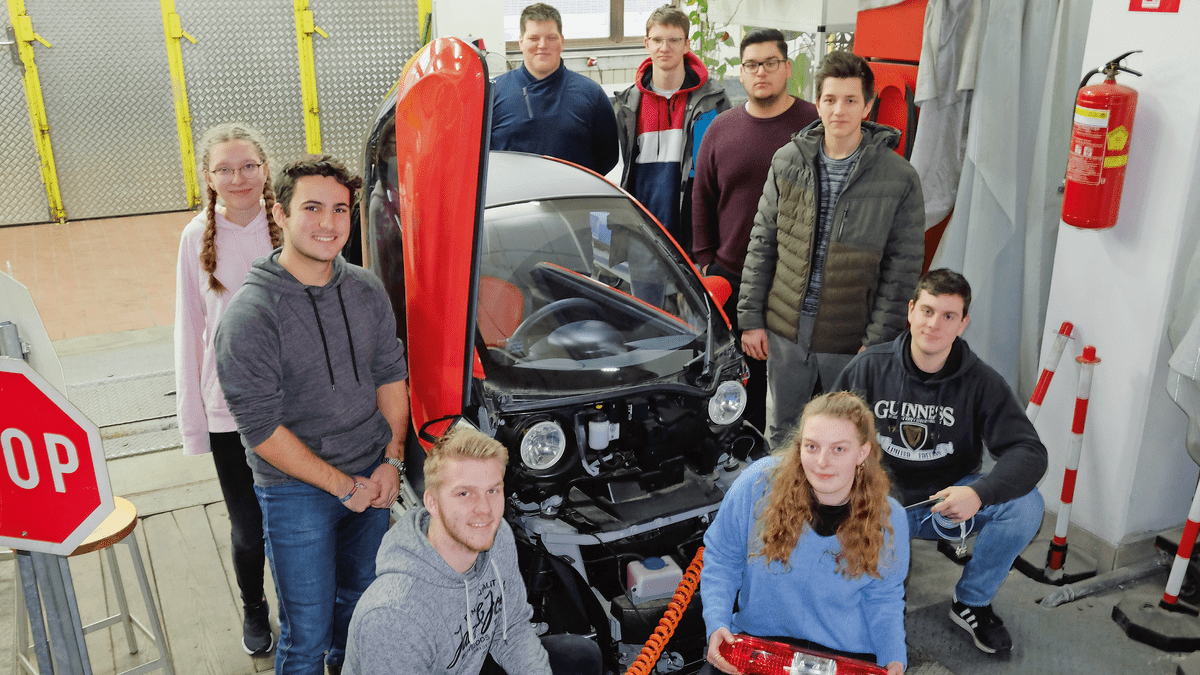
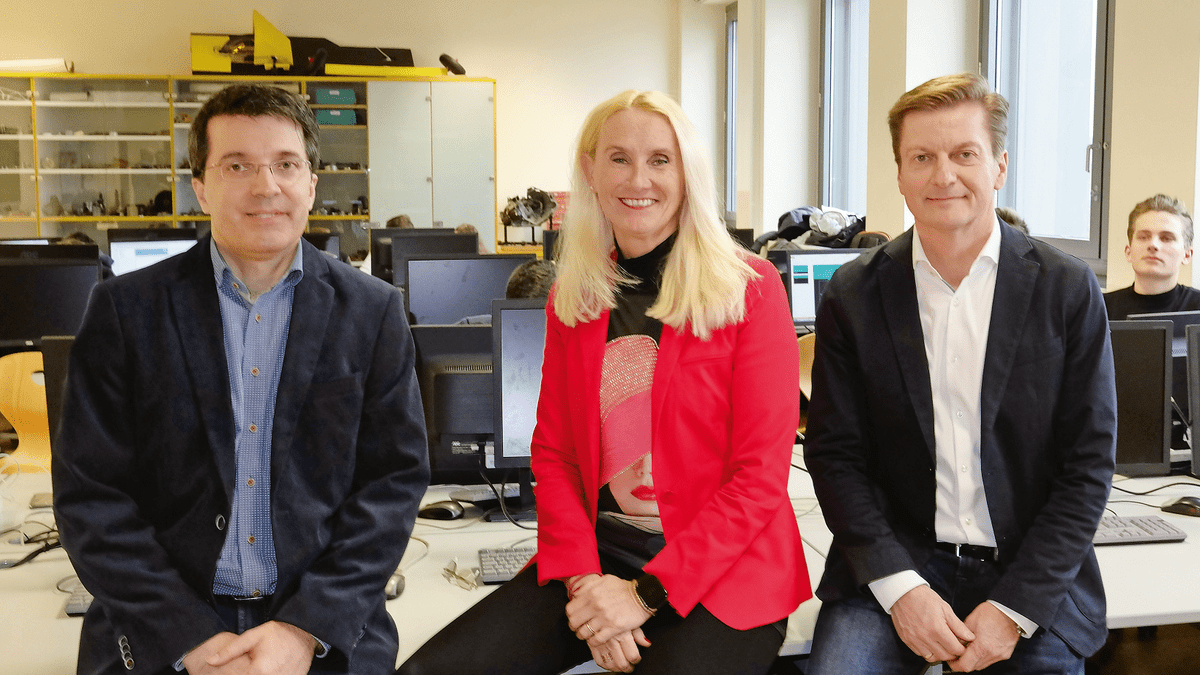
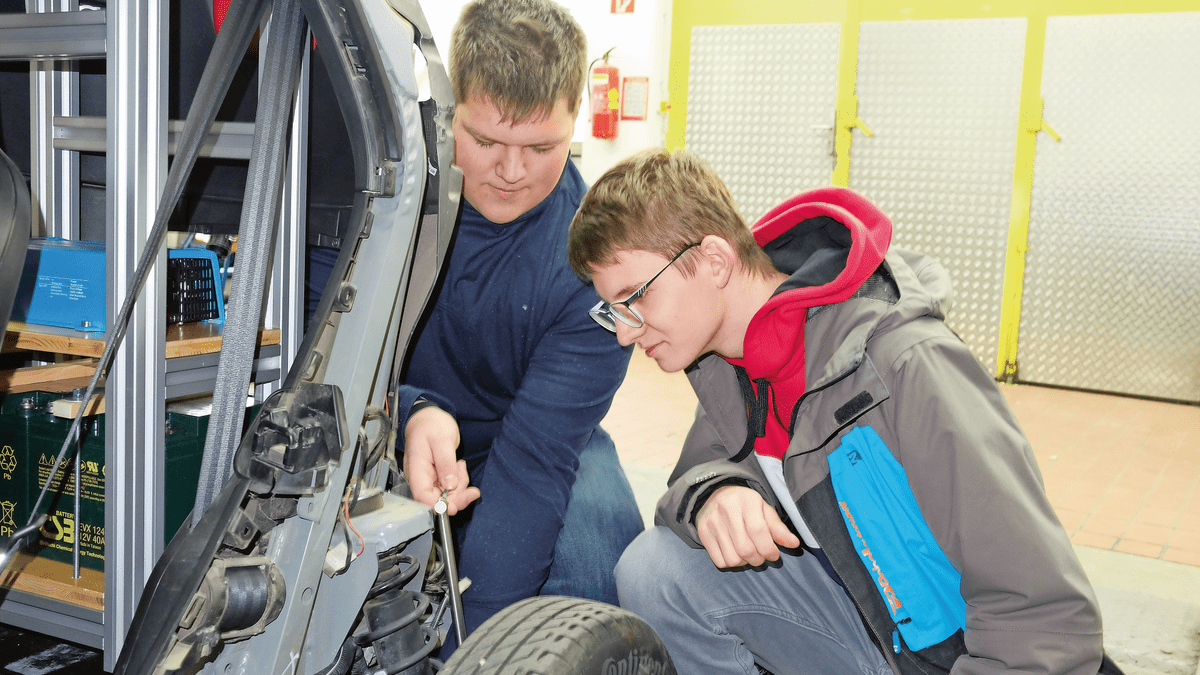
Three colorful Renault Twizys have recently been parked in the workshop hall of the TGM, the largest HTL in Vienna, which is nicknamed the “School of Technology”. The boys and girls from the two high school diploma classes in the mechanical engineering department are allowed to take a close look at the four-wheeled electric minicars under expert guidance, disassemble and reassemble them and equip them with sensors. “This allows us to measure driving dynamics and acceleration in real time and transfer it to a digital twin via interface software,” explains Martin Izaak, who leads the TGM projects for e-mobility together with Gerald Kalteis. Practical screwdriving and digital data processing – anyone who has mastered both is ideally qualified for the current and future requirements of the automotive industry.
IMPROVEMENTS WANTED
“Anyone who wants to design a vehicle today has to be able to do more than just draw,” explains Gabriele Schachinger, head of the mechanical engineering department at the TGM. It ensures that teachers and students can work with the latest software and augmented reality systems. “The Renault Twizy is completely traced on the computer and depicted in virtual reality,” says Schachinger. The physical car is then connected to its digital twin via sensors and WiFi. “Using 3D glasses, you can even zoom in on individual components, walk around them and see them in motion,” says Schachinger. “The students get to know the vehicle down to the last detail and can think about where and how it could be improved,” says specialist teacher Gerald Kalteis. The school chose the Renault Twizy primarily for safety reasons, as the small, two-seater city car with gull-wing doors runs on a relatively safe battery voltage of 60 volts. “Large limousines run on 400 volts or more, so things could end badly if you touch the wrong cable in class,” says subject teacher Martin Izaak.
ASPECTS OF MOBILITY
The electronic construction work and the digital preparation are carried out by the students themselves. “This offers plenty of material for numerous exciting theses in the coming years,” says Schachinger happily. Like her specialist teachers, the department head is convinced that electric drives will play an important role in private transport in the future. “In our lessons, we also take into account various hybrid systems and other drive technologies such as hydrogen and liquid gas,” she emphasizes. And of course, rail vehicles, smart mobility, autonomous vehicles and driverless buses cannot be missing from the transport scenario of the near future. “Although the proportion of boys still predominates at our school, the proportion of girls is constantly increasing,” says Schachinger happily. The students Magdalena and Tanja are also experimenting with the new Twizys in the workshop. “I recently completed an internship at an Austrian manufacturer of airbag cartridges,” says Tanja, who sees her future career prospects in quality management in the domestic supplier industry. Magdalena, on the other hand, prefers to keep her career path open. “Mechanical engineering is an interesting basic training for me,” she says, “but perhaps I would prefer to study architecture or environmental sciences after graduating from high school.”