

 Suche
Suche
 Mein Konto
Emissions test kills diesel engine
During diesel emissions tests as part of the § 57a assessment, it often happens that engines cannot withstand the heavy use. The ÖAMTC therefore developed an alternative test procedure that puts significantly less strain on the engine.

Emissions test kills diesel engine
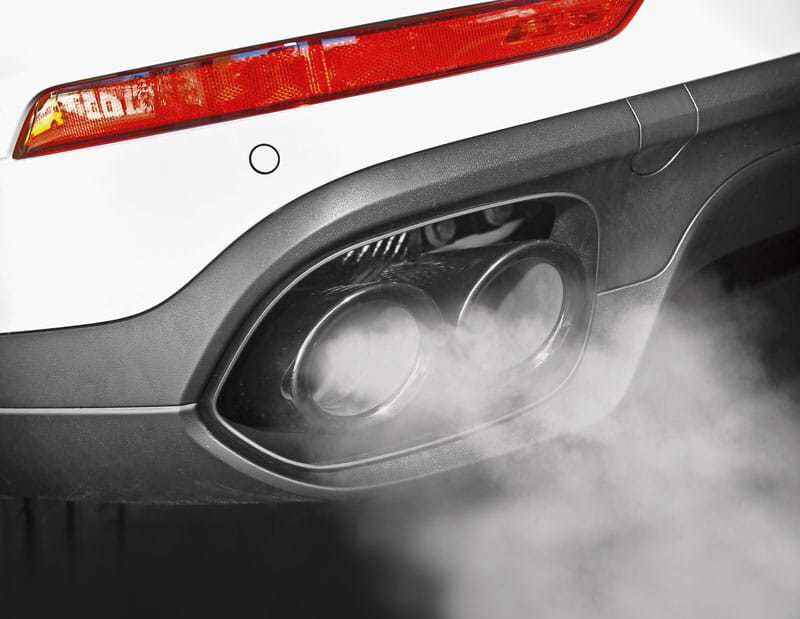

Every week, at least one engine failure is reported to the BMVIT that occurred during an emissions test," says Rudolf Brauch, project manager for technical services at the ÖAMTC, sounding the alarm. "Nobody knows the number of unreported cases, and we also don't know whether consequential damage is to be expected if the engine is still running after the test but sounds different," says Brauch. Explaining such damage to the vehicle owner is not an easy matter, because: “If the engine is accelerated to its maximum speed as prescribed during the emissions test, it sounds as if it is about to explode when the hood is open,” says Brauch. The problem has been known for years and should actually have been history since spring 2015. On April 15th, according to a decree from the BMVIT, an alternative test procedure for diesel engines was approved, in which the unit only has to be accelerated just above the nominal speed, which is on average around 20 percent below the maximum speed. There is no longer any need to hold the maximum or reduced speed for more than four seconds. Rudolf Brauch played a leading role in the development of the new emissions test procedure as part of the §57a catalog of defects working group “Exhaust gas”, in which, in addition to the ÖAMTC, MA 46 and ARBÖ also take part. His conclusion: “Since the new test procedure was approved, the number of engine damage reported during an emissions test has decreased significantly, at least at the ÖAMTC.” However, the new alternative method has hardly been used yet; in most test centers the old measuring method, which challenges the engine to its load limit, is still part of everyday workshop life. "For now there is only the decree from the BMVIT, and many users do not yet know the contents. An update of this topic in the catalog of defects is already planned," explains Rudolf Brauch.
Testing via OBD
In any case, the new, alternative test procedure only brings advantages for the workshops: the engine only has to be warmed up to 65 degrees, the test is faster, quieter, has fewer emissions and is therefore more environmentally friendly. The alternative procedure can be carried out with the most common exhaust gas measuring devices, with neither software intervention nor the setting of new limit values required. “We assume that the new exhaust gas measurement procedure, which is currently only approved in Austria, will also be adopted throughout the EU,” says Rudolf Brauch and is already working on the next test procedure that is even more gentle on the engine and the environment. “Modern Euro 5 and Euro 6 diesel vehicles have built-in electronic self-monitoring of the diesel system, which records all malfunctions,” explains Brauch. The system detects whether the particle filter is working properly and records if it is defective or has even been removed. The Section 57a emissions group is therefore currently coordinating with the BMVIT on the next step in emissions testing: the implementation of OBD-based testing methods, which can also be applied to Euro 4 vehicles with the same technology. It is also necessary to read out the readiness codes, which document the history of the system checks, as the error memories could easily be deleted before a bug check. "The new process could be approved relatively quickly. If it works, you can completely avoid the tailpipe measurement," says Brauch. The classic tailpipe measurement is then only carried out as a check in cases in which apparently correct exhaust gas values and a heavily blackened tailpipe do not match.
Control of nitrogen oxides
As a result of the emissions scandal triggered by VW, the EU is now pushing for the nitrogen oxide emissions that have been caught in the crossfire to be checked when awarding the stickers in the future. The problem is that there are currently neither suitable measuring devices nor corresponding reference values. “The nitrogen oxide emissions are highest when the engine is operating at partial load, and this is difficult to simulate exactly,” explains ÖAMTC technician Brauch. His forecast: “As long as there are no valid reference values, we assume that we will be able to prevent the EU from making another move in this direction!”